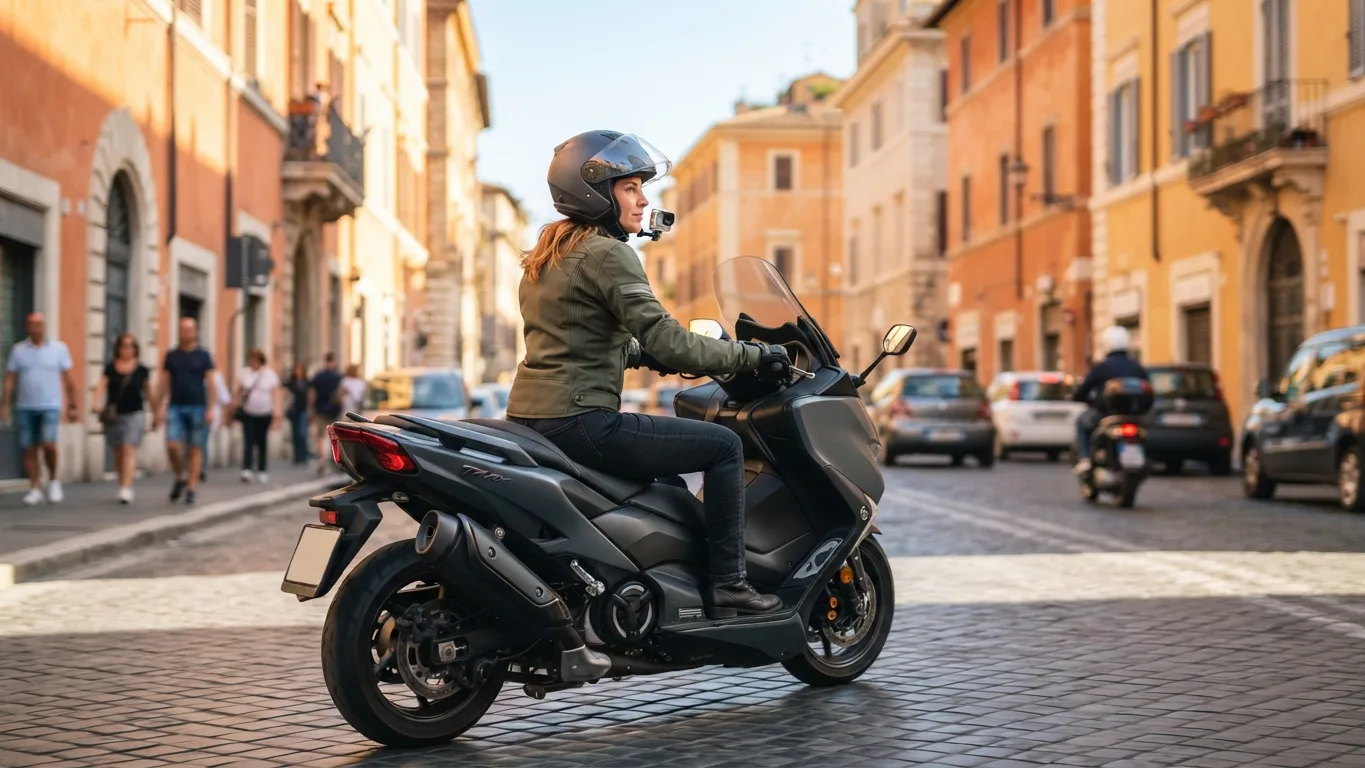
A leading two-wheeler manufacturer wanted to understand how its customers really use their vehicles day to day. Surveys could tell the team what owners say about a scooter. They could not show how a rider handles traffic, what they carry or how the vehicle fits into a household. This case study shows how our qualitative recruitment services supported a combined ethnographic and interview design in Italy.
The project ran in Rome and Milan at the same time. Each participant took part in a filmed commute and a face-to-face interview on the same day. The objective was to observe natural scooter usage across daily commuting scenarios and to capture rider feedback on satisfaction, friction points and unmet expectations. The findings were intended to inform future product design and innovation decisions.
This kind of work depends on getting the right people into the right place, with the right permissions, before anyone presses record. That is where fieldwork partners earn their place.
The challenge
The client wanted to learn how Maxi scooter owners in Italy actually use their vehicles in everyday life. A standard survey could not deliver the depth or authenticity needed. The team needed to watch real journeys and then talk to the riders straight afterwards, while the experience was fresh.
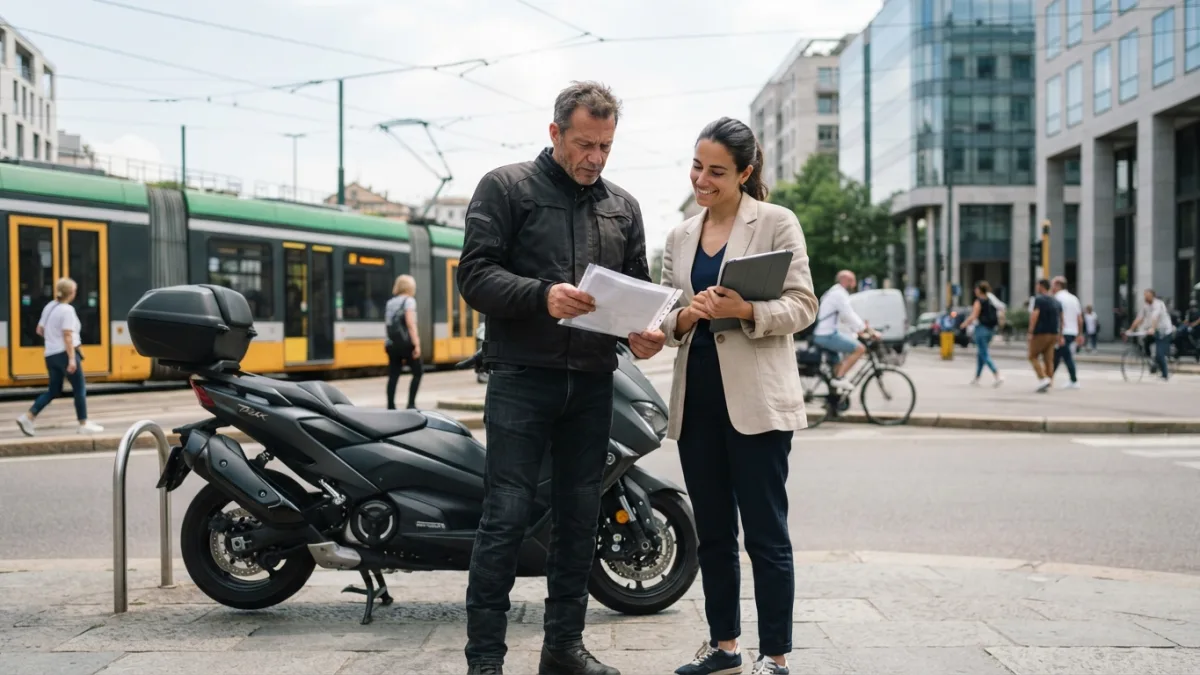
That design made recruitment demanding. Several requirements applied at once:
- Specific vehicles: participants had to own one of five named models, and each had to have been bought within a 12 to 18 month window (a 2024 or 2025 purchase).
- Defined profile: riders aged 25 to 55, split 55% male and 45% female, with monthly household income above EUR 1,200.
- Balanced buyer types: a 50/50 split between first-time and repeat buyers.
- High commitment: every participant had to agree to have their commute filmed and then sit a 90 to 120 minute interview on the same day.
- Verification: all respondents had to be checked against their driving licence and vehicle registration before fieldwork began.
- Parallel delivery: Rome and Milan had to run together, with no time lag between the cities.
Each criterion on its own is manageable. Together they narrow the pool considerably, and they leave little room for error. A participant who owns the wrong model, bought outside the window, or declines filming on the day cannot simply be swapped in at the last minute.
Our approach: qualitative recruitment services in two cities
Research and Metric managed all recruitment for the project. We built it around a structured digital screener so that every respondent was qualified against the same criteria, whichever city they lived in.
A screener built around the study design
The screener covered the points that determined eligibility and the way the sample would be balanced:
- city (Rome or Milan)
- age
- brand and model owned
- year of purchase
- daily kilometres ridden
- income bracket
- buyer classification (first-time or repeat)
Capturing model and year of purchase at screening stage meant we could test the strict ownership and recency rules before a person was ever put forward. Recording daily kilometres ridden gave the client team a view of how much each person rides. Buyer classification let us manage the 5 and 5 split between first-time and repeat buyers as recruitment progressed.
Client approval before any session
Respondent profiles, including the driving licence and vehicle registration certificate, were shared with the client team for approval before any session started. This step gave the client confidence that every participant was who they said they were and owned the vehicle the study required. It also removed uncertainty from session day, because the team knew who they were meeting and what they would be observing.
Our qualitative recruitment work is designed around this principle: strict criteria, documented checks and the client kept in the loop before fieldwork starts.
One day, two methods
Each participant took part in two linked activities on the same day. First came a filmed ethnographic ride-along of about 30 minutes. The client team followed the participant on their normal daily commute, either home to office or the return leg. The footage was intended to capture interaction with traffic, rider posture, gear usage, load carried and road behaviour.
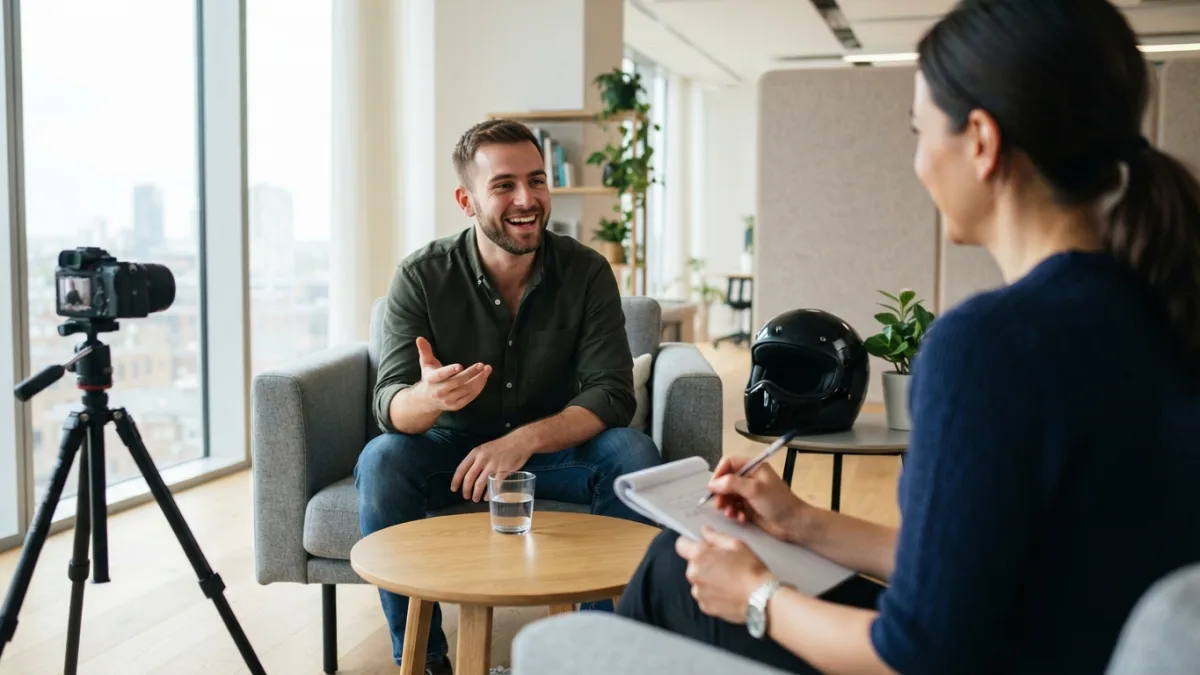
Immediately afterwards, each participant took part in a structured face-to-face interview lasting 90 to 120 minutes. These in-depth interviews were conducted in Italian by local moderators. The guide covered demographic and lifestyle profiling, satisfaction and dissatisfaction with the vehicle, latent needs and the full purchase journey.
Pairing observation with an interview on the same day allows a moderator to ask about what has just been seen. The ride itself becomes a shared reference point for the conversation.
Fieldwork and quality
Fieldwork was run in Rome and Milan in parallel within the agreed fieldwork window. This dual-city fieldwork needed coordination across both locations so that sessions in one city did not wait on the other. Our fieldwork management approach treats scheduling, participant confirmation and session logistics as part of quality, not an afterthought.
Verification and consent
Quality began before the first ride. Because respondent verification by licence and vehicle registration was completed and approved in advance, the sessions started with confirmed participants. Audio and video consent was secured from all participants, and photographs were taken only with full participant consent. Filming a person on their commute, and photographing their home and workplace, are personal activities, so consent was handled as a core part of the process.
This sits within the standards we work to as a company, including the ICC/ESOMAR International Code, ISO 20252 and ISO 27001, along with applicable data protection law.
Local-language moderation
The whole project was conducted in Italian. Using local moderators meant participants could describe their routines, frustrations and decisions in their own language and in their own words. This matters most for the latent needs part of the guide, where nuance in phrasing can change the meaning of an answer.
A standardised photographic record
Alongside the video and interview recordings, a standardised photograph set was captured at every session. It covered:
- the vehicle, including multiple views
- speedometer and odometer readings
- any modifications made to the vehicle
- the rider on the vehicle
- articles carried
- the household and surroundings
- the workplace
Using the same set at every session means the client team can compare riders in the same way, across both cities and across first-time and repeat buyers.
What the client received
This project is described here in terms of what was delivered. The deliverables were:
- Ten completed sessions across Rome and Milan, run in parallel within the agreed fieldwork window. The sample was 10 qualified participants, made up of 5 first-time buyers and 5 repeat buyers.
- Verified and approved profiles. All respondent profiles were verified and approved by the client team before session day.
- Ride-along videos and interview recordings, delivered within 48 hours of each session.
- Full photographic documentation packages, compiled per respondent.
- Complete consent records. Audio and video consent was secured from all ten participants.
- Fieldwork in Italian throughout, with local moderators.
Delivery within 48 hours of each session meant the client team could begin reviewing material while the sessions were still fresh in their minds.
Capabilities this project shows
For research agencies and brands planning similar work, the project illustrates several capabilities:
- dual-city qualitative fieldwork in parallel
- strict brand, model and purchase recency recruitment, with client pre-approval
- ethnographic observation and interviews combined in one day per participant
- consent and physical documentation management
- local-language moderation with full recording and rapid turnaround
If you are planning automotive market research that needs real riders, real vehicles and real journeys, see our automotive market research page or get in touch to talk through your audience and timelines.
Client project. Client details are anonymised.