
Introduction
Healthcare market research stands at a critical crossroads where the demand for deeper patient insights collides with an increasingly complex web of regulatory requirements. According to recent industry analysis, the global healthcare compliance software market alone reached an estimated $3.8 billion in 2025 and is projected to grow at over 13% CAGR through 2035, underscoring just how seriously organizations are investing in regulatory adherence (Precedence Research).
The challenge is clear: healthcare organizations, pharmaceutical companies, and research firms need actionable intelligence to drive innovation, improve patient outcomes, and maintain competitive positioning. Yet gathering this intelligence requires navigating a labyrinth of regulations including HIPAA in the United States, GDPR across Europe, and dozens of region-specific data privacy laws in APAC markets. The penalties for non-compliance are severe ranging from substantial financial fines to reputational damage that can take years to recover from.
This is precisely where healthcare market research expertise becomes indispensable. At Research and Metric, we specialize in designing research methodologies that deliver robust, actionable insights while maintaining full regulatory compliance across 40+ global markets. In this comprehensive guide, we explore the frameworks, strategies, and emerging trends that enable organizations to gather the intelligence they need without compromising on compliance.
Understanding the Healthcare Market Research Compliance Landscape
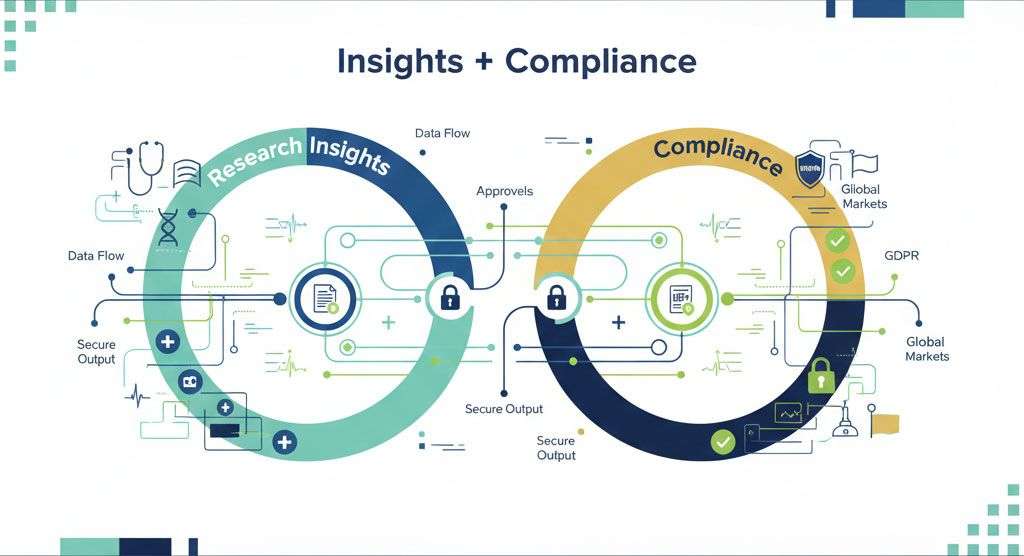
The regulatory environment surrounding healthcare market research has grown substantially more complex in recent years. Organizations conducting research in the healthcare space must contend with multiple overlapping and sometimes conflicting regulatory frameworks that govern how patient data can be collected, stored, processed, and shared.
Key Regulations Shaping Healthcare Data Compliance
At the foundation of healthcare data compliance in the United States lies HIPAA (Health Insurance Portability and Accountability Act), which establishes strict standards for the protection of Protected Health Information (PHI). HIPAA's Privacy Rule and Security Rule together create a comprehensive framework that any organization handling patient data must follow. Research conducted by the HHS Office for Civil Rights continues to result in significant enforcement actions, with settlements frequently reaching millions of dollars for violations (HIPAA Journal).
In the European Union, GDPR imposes additional requirements around explicit consent, data minimization, and the right to erasure principles that fundamentally shape how patient data collection can be structured for research purposes. The regulation's extraterritorial reach means that any organization processing personal data of individuals located in the EU must comply, regardless of where the organization is based, when offering services to or monitoring behaviour of those individuals.
Beyond these headline regulations, researchers must also navigate FDA guidelines for clinical research, state-level privacy laws such as CCPA in California, and emerging frameworks across APAC markets including India's Digital Personal Data Protection Act and Japan's APPI. At Research and Metric, we maintain dedicated compliance teams across all markets we operate in, ensuring that every research project meets local regulatory requirements from design through delivery.
Key Takeaway: Successful healthcare market research requires a thorough understanding of overlapping global regulations, with compliance built into the research design from the very beginning rather than treated as an afterthought.
Ethical Patient Data Collection: Balancing Insights and Privacy
Gathering meaningful patient data collection for research purposes requires methodologies that respect individual privacy rights while still producing statistically valid, actionable results. This balance is one of the most significant challenges in modern healthcare market research.
De-identification and Anonymization Strategies
The cornerstone of compliant healthcare research lies in proper data handling techniques. De-identification the process of removing personal identifiers from datasets enables researchers to work with valuable health information without exposing individual patient identities. HIPAA outlines two approved methods: the Safe Harbor method, which requires removal of 18 specific identifiers, and the Expert Determination method, which uses statistical analysis to verify that re-identification risk is minimal.
Advanced anonymization techniques go further, applying methods such as k-anonymity, l-diversity, and differential privacy to ensure that even sophisticated data linkage attacks cannot compromise participant identity. These approaches are particularly important in pharma market research, where datasets may contain rare conditions or treatments that could inadvertently identify individuals within small patient populations.
Research organizations increasingly leverage AI-powered tools to automate de-identification processes, significantly reducing human error while accelerating data preparation timelines. At Research and Metric, our qualitative research methodologies incorporate automated de-identification protocols that maintain data utility while ensuring full regulatory compliance.
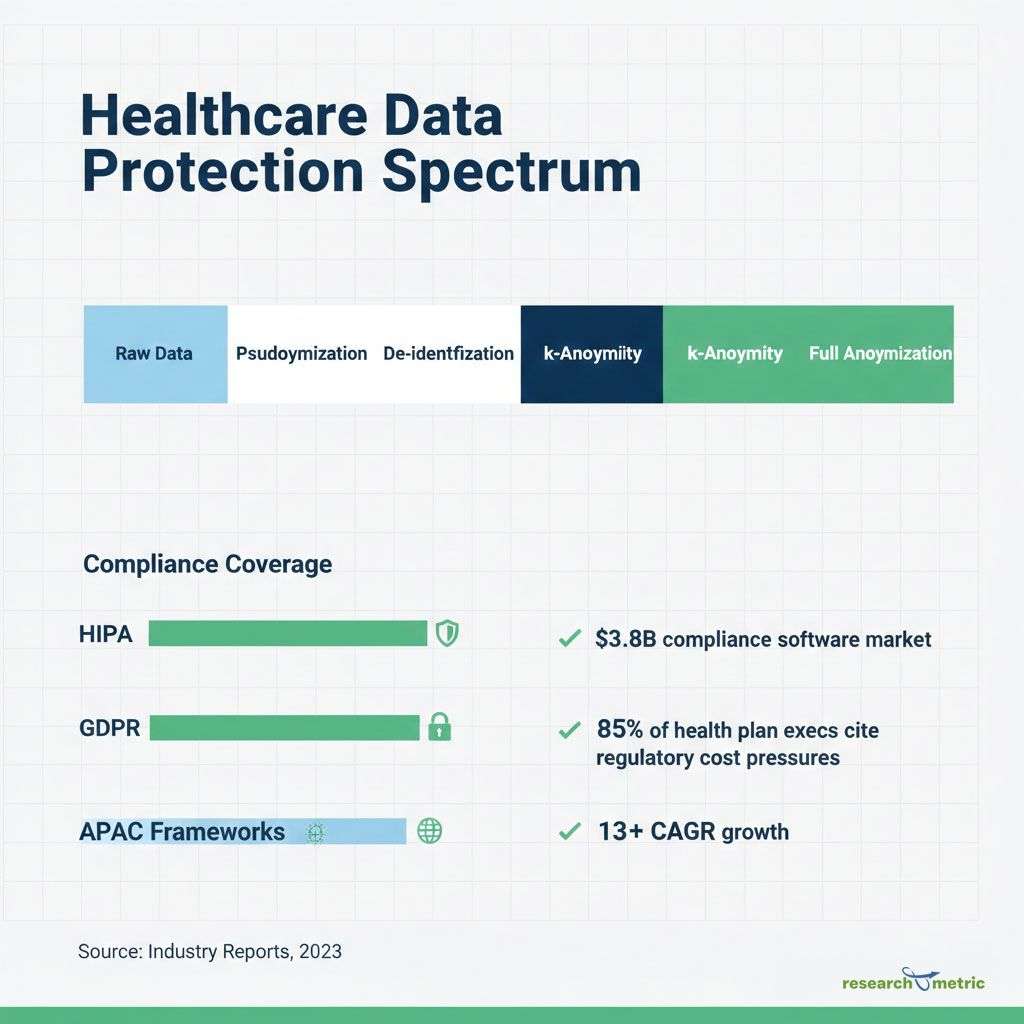
Key Takeaway: Effective patient data collection strategies employ layered de-identification and anonymization techniques that protect participant privacy while preserving the analytical value of research data.
HIPAA Compliant Research: Building a Robust Framework
Conducting HIPAA compliant research requires more than simply following a checklist it demands an organizational culture of privacy awareness embedded into every stage of the research lifecycle.
Informed Consent and Research Authorization
One of the most critical elements of healthcare market research compliance is obtaining proper informed consent. Under HIPAA, research using PHI typically requires either individual authorization from each participant or an Institutional Review Board (IRB) waiver, depending on the research design and the nature of data being collected.
The consent process itself has evolved significantly, particularly with the growth of digital research methodologies. Electronic consent (e-consent) platforms now enable researchers to present clear, accessible information about data usage, participant rights, and study objectives in interactive formats that improve comprehension and engagement. These platforms also create robust audit trails that demonstrate compliance during regulatory reviews.
For clinical research insights projects involving sensitive patient populations such as oncology patients, mental health subjects, or pediatric participants additional safeguards are required. Research protocols must address vulnerability assessments, additional consent provisions, and enhanced data protection measures specific to these populations.
Research and Metric's data collection infrastructure is designed with HIPAA compliance at its core, incorporating encrypted data transmission, role-based access controls, and comprehensive audit logging across all research touchpoints.
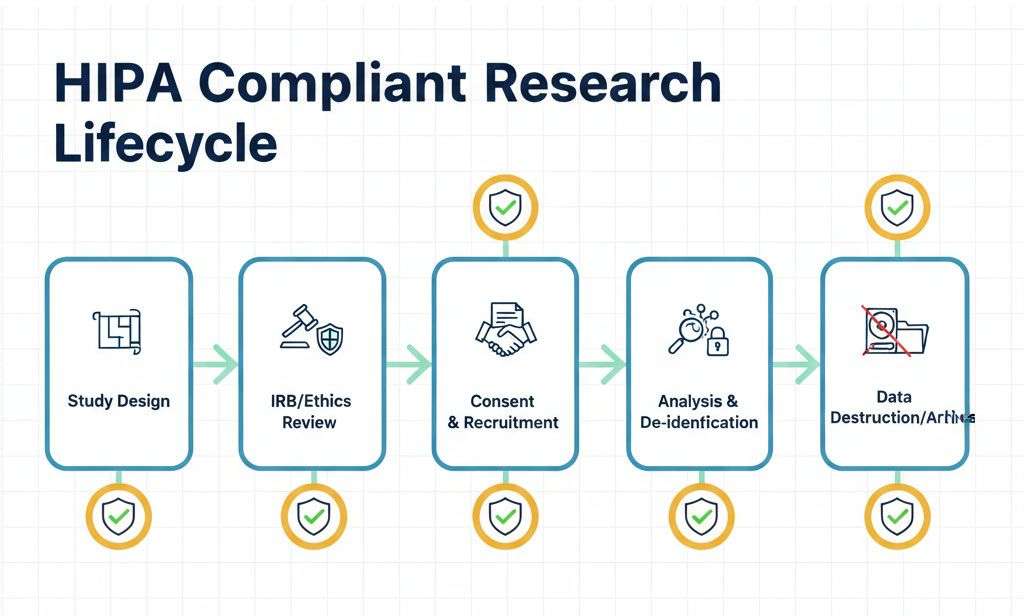
Key Takeaway: Building a robust HIPAA compliant research framework requires comprehensive consent processes, ongoing training, and technology infrastructure that enforces compliance at every touchpoint.
Technology Solutions for Compliant Healthcare Data Collection
The technology stack underpinning modern compliant data collection in healthcare has undergone a dramatic transformation. Where manual processes once dominated, AI-driven platforms now enable organizations to maintain rigorous compliance while dramatically improving research efficiency and scale.
AI-Powered Compliance Monitoring
Artificial intelligence is reshaping how organizations approach healthcare regulatory compliance in research operations. Machine learning algorithms can now continuously monitor data handling processes, flagging potential compliance issues in real time before they escalate into violations. These systems analyze patterns across data access logs, consent documentation, and data transfer records to identify anomalies that human reviewers might miss.
Natural language processing (NLP) tools are being deployed to analyze research instruments surveys, interview guides, and questionnaires to identify questions or data collection approaches that could inadvertently capture PHI or violate regulatory boundaries. This pre-screening capability is particularly valuable in large-scale, multi-market healthcare market research programs where survey instruments must comply with varying regulatory frameworks across different jurisdictions.
Cloud-based compliance platforms are also gaining significant traction, with cloud-based solutions commanding over 52% of the healthcare compliance software market share according to industry analysis (Mordor Intelligence). These platforms offer automatic regulatory updates, ensuring that research operations remain compliant as regulations evolve a critical capability given the pace of regulatory change in healthcare.
Research and Metric's panel recruitment technology incorporates built-in compliance verification, ensuring that every research participant is properly screened, consented, and tracked throughout the research engagement.
Key Takeaway: Technology solutions particularly AI-powered monitoring and cloud-based compliance platforms are transforming compliant data collection from a burdensome overhead into a strategic advantage.
Best Practices for Navigating Healthcare Market Research Compliance
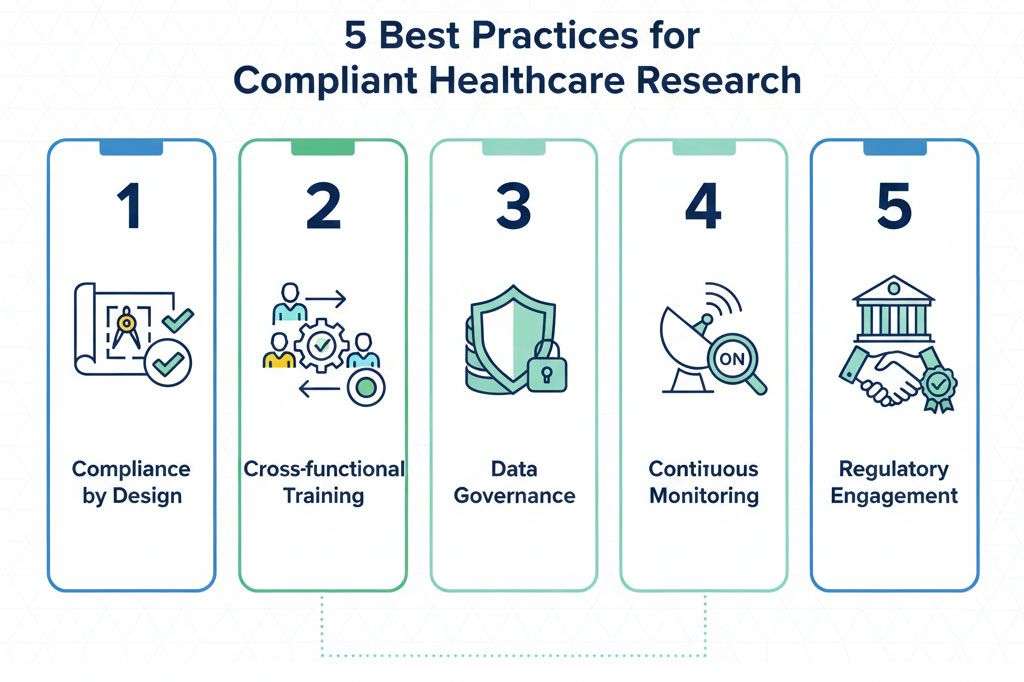
Achieving consistent compliance in healthcare market research requires a systematic approach that integrates regulatory awareness into every aspect of research operations. Based on our experience conducting compliant research across 40+ global markets, here are five essential strategies.
Strategic Approaches to Healthcare Data Compliance
First, embed compliance into research design from inception. Rather than layering compliance reviews onto completed research plans, organizations should integrate regulatory requirements into the initial research design phase. This "compliance by design" approach prevents costly redesigns, ensures research instruments are optimized for both insight quality and regulatory adherence, and creates a foundation for efficient IRB or ethics committee review.
Second, invest in cross-functional compliance training. Healthcare market research compliance is not solely the responsibility of legal or compliance teams. Every individual involved in research from project managers and analysts to field researchers and data scientists should receive regular training on relevant regulations, data handling protocols, and incident response procedures. Organizations that maintain quarterly compliance training programs demonstrate significantly lower violation rates.
Third, implement robust data governance frameworks. Establish clear policies for data classification, access controls, retention periods, and destruction protocols. These frameworks should account for the full lifecycle of research data, from initial collection through analysis, reporting, and eventual archival or destruction. Clear data governance is fundamental to achieving and maintaining healthcare regulatory compliance.
Fourth, leverage technology for continuous compliance monitoring. Automated compliance tools can track data flows, monitor access patterns, and generate audit-ready documentation in real time. This approach reduces reliance on periodic manual audits and provides continuous assurance that research operations remain within regulatory boundaries.
Fifth, build relationships with regulatory bodies and industry associations like ESOMAR and MRA. Proactive engagement with regulators provides early visibility into upcoming regulatory changes and demonstrates organizational commitment to compliance, which can be valuable context during regulatory reviews or investigations.
Research and Metric's comprehensive research services are built on these principles, ensuring that every project delivers compliant, actionable intelligence regardless of market or therapeutic area.
The Future of Healthcare Market Research Compliance
The compliance landscape for healthcare market research is evolving rapidly, driven by technological innovation, regulatory modernization, and shifting patient expectations around data privacy and transparency.
Emerging Trends in Clinical Research Insights
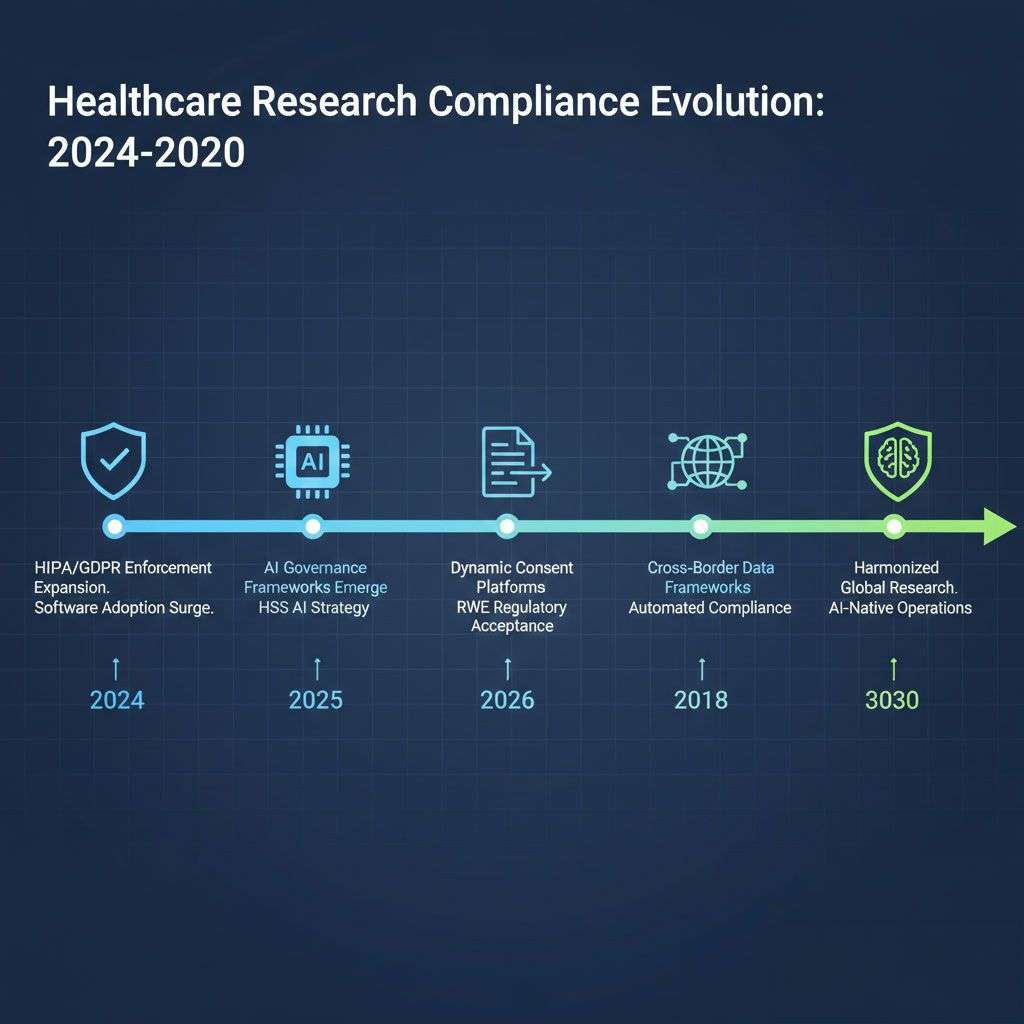
Several trends are poised to reshape how organizations approach compliance in healthcare research over the coming years. The integration of AI governance frameworks into regulatory requirements is accelerating, with the U.S. Department of Health and Human Services releasing its AI Strategy in late 2025 to guide how artificial intelligence should be integrated across healthcare operations. Research organizations using AI-powered methodologies will need to demonstrate algorithmic transparency, bias mitigation, and robust governance frameworks.
Real-world evidence (RWE) and real-world data (RWD) continue to gain regulatory acceptance, with the FDA and EMA increasingly incorporating these data sources into decision-making frameworks. This shift creates new opportunities for healthcare market research organizations to contribute to regulatory submissions and health technology assessments, but also introduces new compliance considerations around data provenance, quality, and linkage.
Patient-centric consent models are emerging as another significant trend. In 2026, regulatory evolution will shape patient relationships through increasing requirements for transparency and consent, requiring organizations to spell out in far more detail exactly how patient data is being used. Dynamic consent platforms which allow participants to modify their consent preferences over time are gaining traction as a solution that balances regulatory compliance with participant autonomy.
Research and Metric is committed to staying at the forefront of these developments, leveraging our expertise in AI-driven research methodologies and our global presence across healthcare markets to help clients navigate the evolving compliance landscape.
Key Takeaway: The future of healthcare market research compliance will be shaped by AI governance requirements, real-world evidence adoption, and dynamic consent models that demand more transparent, technology-enabled approaches to research.
Conclusion: Mastering Healthcare Market Research Compliance
Healthcare market research is an indispensable driver of innovation, patient outcomes improvement, and strategic decision-making across the global healthcare ecosystem. As we have explored, the key to successful healthcare research lies not in choosing between compliance and insight quality, but in building frameworks that deliver both simultaneously.
From understanding the complex regulatory landscape spanning HIPAA, GDPR, and regional data privacy laws to implementing advanced de-identification techniques and leveraging AI-powered compliance monitoring, organizations that invest in compliant research infrastructure gain a significant competitive advantage. The five strategic best practices outlined in this guide compliance by design, cross-functional training, robust data governance, continuous monitoring, and regulatory engagement provide a roadmap for achieving this advantage.
As regulations continue to evolve and patient expectations around data privacy grow, the organizations that thrive will be those that view compliance not as a barrier to research, but as a foundation for trust, quality, and sustainable growth.
Ready to conduct powerful healthcare market research while maintaining full regulatory compliance? Contact Research and Metric today to discover how our AI-powered research solutions can transform your healthcare data into actionable intelligence — safely, ethically, and at scale.
FAQ: Healthcare Market Research
What is healthcare market research and why does compliance matter?
Healthcare market research involves the systematic collection and analysis of data related to healthcare products, services, and patient experiences. Compliance matters because healthcare market research often involves sensitive patient data protected by regulations like HIPAA and GDPR, and non-compliance can result in significant financial penalties, legal liability, and reputational harm.
How does HIPAA impact healthcare market research methodologies?
HIPAA significantly shapes healthcare market research by establishing strict rules around the use and disclosure of Protected Health Information. Researchers must obtain proper authorization or IRB waivers, implement robust de-identification protocols, and maintain comprehensive audit trails. Healthcare market research organizations must design methodologies that produce valid insights while adhering to these requirements.
What are the key trends in healthcare market research compliance for 2026?
Key trends in healthcare market research compliance include the integration of AI governance frameworks into regulatory requirements, the growing acceptance of real-world evidence by regulatory bodies, dynamic consent platforms that give patients more control over their data, and increased cross-border harmonization of data privacy regulations. Cloud-based compliance solutions are also growing rapidly, commanding over 52% market share.
What ROI can businesses expect from compliant healthcare market research?
Investing in compliant healthcare market research delivers substantial returns by reducing regulatory risk exposure, building patient and stakeholder trust, and producing higher-quality data that can withstand regulatory scrutiny. Organizations practicing compliant healthcare market research also benefit from smoother regulatory submissions, faster product approvals, and stronger market positioning outcomes that typically far outweigh the costs of compliance infrastructure.
How can Research and Metric help with healthcare market research?
Research and Metric provides end-to-end healthcare market research services across 40+ global markets, with compliance built into every stage of our research process. From HIPAA-compliant survey design and AI-powered data collection to advanced analytics and regulatory-ready reporting, our team ensures that your research delivers actionable insights while maintaining full regulatory adherence. Learn more about our services.


