
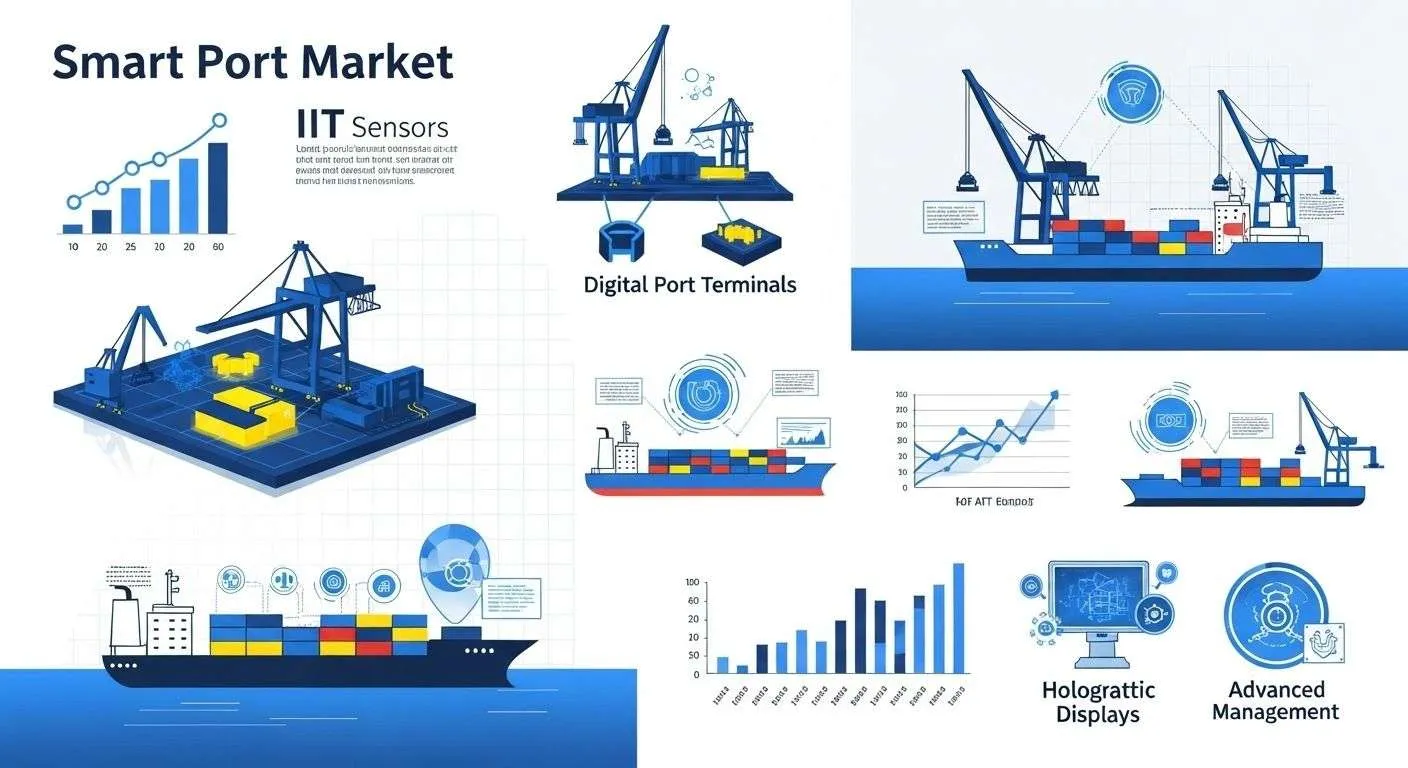
The smart port market is experiencing unprecedented transformation as maritime facilities worldwide embrace cutting-edge technologies to revolutionize their operations. This sector represents one of the most significant technological revolutions in maritime commerce today, with global trade volumes surging and supply chain complexities intensifying. Ports across all continents are adopting comprehensive digital transformation strategies to enhance operational efficiency, reduce operational costs, and improve environmental sustainability outcomes.
The integration of Internet of Things (IoT) devices, artificial intelligence, and automated systems has fundamentally transformed how smart ports operate, creating unprecedented opportunities for efficiency gains and competitive advantages. With the global market projected to reach substantial growth milestones in the coming years, understanding these technological shifts has become crucial for port authorities, logistics companies, and maritime industry professionals. This comprehensive analysis by Research and Metric examines the current state, growth drivers, and future prospects of the industry, providing valuable insights for industry stakeholders and decision-makers navigating this revolutionary landscape.
Understanding Smart Port Technology: The Foundation of Modern Maritime Operations
Smart port technology encompasses a comprehensive ecosystem of digital solutions designed to optimize every aspect of port operations. At its core, the industry leverages interconnected systems that collect, analyze, and act upon real-time data to streamline processes from cargo handling to vessel traffic management.
Core Components of Smart Port Infrastructure
The technological foundation includes several critical components that work synergistically to create efficient operations. Advanced sensor networks monitor everything from equipment performance to environmental conditions, while sophisticated analytics platforms process vast amounts of data to identify optimization opportunities within the ecosystem. Automated data collection methods have become essential for capturing the granular information needed to drive these intelligent systems.
Maritime automation systems form another cornerstone of development, enabling autonomous crane operations, robotic container handling, and intelligent traffic routing. These systems reduce human error, increase operational speed, and provide consistent performance regardless of external conditions.

Digital port technology also encompasses cybersecurity measures, communication networks, and integration platforms that ensure seamless coordination between different operational elements. The complexity of these interconnected systems requires specialized market research methodologies to fully understand their impact and potential. According to McKinsey Global Institute maritime studies, automation can increase port productivity by up to 30% while reducing operational costs significantly.
Market Size and Growth Projections: Quantifying the Revolution
The smart port market has demonstrated remarkable growth trajectories across multiple geographic regions and technology segments. Current valuations reflect substantial investment in digital transformation initiatives, with port authorities recognizing the long-term value proposition of smart technologies.
Regional Market Analysis
North America leads in adoption rates, driven by major ports in Los Angeles, New York, and Seattle implementing comprehensive digitalization programs. The region's focus on supply chain resilience and operational efficiency has accelerated investment in IoT port operations and automated systems.
European markets show strong growth in sustainable port technologies, with Rotterdam, Hamburg, and Antwerp pioneering green technology integration alongside smart infrastructure development. The European Union's environmental regulations have created additional incentives for investments that reduce emissions and improve resource utilization.
Asia-Pacific represents the fastest-growing segment, with Singapore, Shanghai, and Dubai establishing themselves as global leaders in maritime technology innovation. The region's massive trade volumes and new port construction projects provide ideal environments for implementing cutting-edge solutions. Lloyd's List Intelligence port technology reports indicate that Asian ports are investing over $15 billion annually in smart technologies.
Understanding these market research trends requires sophisticated analytical approaches that can account for regional variations, technology adoption rates, and economic factors influencing investment decisions.
Key Growth Drivers: Forces Shaping Development
Several fundamental factors are driving accelerated adoption of smart port technologies across the global maritime industry. Trade volume growth continues to pressure ports to increase capacity and efficiency without proportional infrastructure expansion, making digital solutions increasingly attractive.
Technology Advancement and Cost Reduction
The decreasing costs of sensors, computing power, and wireless communication have made technology more accessible to ports of various sizes. Cloud computing platforms enable smaller ports to access sophisticated analytics capabilities without massive upfront investments, democratizing access to advanced management solutions.
Artificial intelligence and machine learning algorithms have matured significantly, providing reliable predictive capabilities for maintenance scheduling, traffic optimization, and resource allocation. These technologies enable ports to move from reactive to proactive operational models, significantly improving efficiency and reducing costs. The International Maritime Organization (IMO) reports that digital technologies can reduce port dwell times by up to 25%.
Environmental and Regulatory Pressures
International maritime regulations increasingly emphasize environmental sustainability, creating demand for technologies that can monitor and reduce emissions, optimize energy consumption, and improve waste management. Smart port systems provide the data visibility and control mechanisms necessary to achieve these environmental objectives.
The International Maritime Organization's greenhouse gas reduction targets have accelerated investment in clean technology solutions, with smart ports playing a crucial role in achieving industry-wide sustainability goals. Industry analysis techniques help organizations navigate these complex regulatory environments and identify optimal compliance strategies within the evolving landscape.
Technology Segments and Applications: Diverse Solutions
The industry encompasses numerous technology categories, each addressing specific operational challenges and opportunities. Understanding these segments provides insight into investment priorities and development trajectories.
IoT and Sensor Networks
Internet of Things devices form the sensory system of smart ports, collecting data on equipment performance, environmental conditions, cargo status, and operational metrics. These networks enable real-time monitoring and rapid response to changing conditions, significantly improving operational visibility.
Advanced sensor technologies monitor everything from crane performance to air quality, providing comprehensive situational awareness that enables data-driven decision making. The integration of these systems with analytics platforms creates powerful capabilities for optimization and predictive maintenance.
Automated Handling and Logistics Systems
Robotic systems and automated guided vehicles (AGVs) are transforming cargo handling operations, reducing labor costs while improving safety and consistency. These systems can operate continuously and integrate seamlessly with port management software to optimize throughput and reduce bottlenecks.
Automated stacking cranes and intelligent yard management systems maximize storage capacity utilization while minimizing container handling time. The coordination of these systems requires sophisticated software platforms that can manage complex logistics operations in real-time.
Digital Twin Technology
Digital twin platforms create virtual representations of physical port infrastructure, enabling simulation, optimization, and predictive analysis capabilities. These systems allow port operators to test different scenarios, identify potential issues, and optimize operations before implementing changes in the physical environment.
The ability to model complex interactions between different port systems provides unprecedented insight into operational dynamics and optimization opportunities. Research and Metric's expertise in digital transformation analysis enables organizations to evaluate these emerging technologies effectively.
Market Challenges and Barriers: Navigating Implementation Complexities
Despite significant opportunities, the industry faces several challenges that influence adoption rates and implementation strategies. Understanding these barriers is crucial for stakeholders planning digital transformation initiatives.
Integration and Interoperability Issues
Many ports operate with legacy systems that were not designed for digital integration, creating technical challenges when implementing smart port solutions. The complexity of coordinating multiple technology vendors and ensuring system compatibility requires careful planning and substantial technical expertise within the ecosystem.
Standardization efforts are ongoing, but the lack of universal protocols can complicate system integration and limit the benefits of smart port investments. Industry collaboration and standards development remain critical for overcoming these technical barriers.

Cybersecurity and Data Protection
The increased connectivity and data collection inherent in smart port operations create new cybersecurity vulnerabilities that require robust protection measures. Port authorities must balance operational efficiency with security requirements, often requiring significant investment in cybersecurity infrastructure and expertise.
The critical nature of port operations makes them attractive targets for cyber attacks, necessitating comprehensive security strategies that protect both operational systems and sensitive commercial data. Custom research capabilities help organizations develop comprehensive business cases for investments while addressing security concerns.
Investment and ROI Considerations
The substantial capital requirements for implementation can be challenging for port authorities with limited budgets. Demonstrating clear return on investment for these technologies requires sophisticated financial analysis and long-term strategic planning.
Many benefits, such as improved sustainability and enhanced competitiveness, are difficult to quantify in traditional financial terms, complicating investment justification processes. Custom research capabilities help organizations develop comprehensive business cases for smart port investments.
Competitive Landscape: Key Players and Strategic Positioning
The market features diverse participants ranging from established technology companies to specialized maritime solution providers. Understanding competitive dynamics provides insight into market evolution and strategic opportunities.
Technology Vendors and System Integrators
Major technology companies like IBM, Cisco, and Microsoft provide foundational technologies and platforms that enable smart port development. These companies leverage their broader technology capabilities to create comprehensive port management solutions.
Specialized maritime technology providers offer industry-specific solutions that address unique operational requirements. These companies often have deep domain expertise and established relationships with port authorities, providing competitive advantages in complex implementation projects.
Port Operators and Public-Private Partnerships
Leading port operators are increasingly developing internal technology capabilities while partnering with external providers for specialized solutions. This approach enables ports to maintain control over critical operations while accessing cutting-edge technologies.
Public-private partnerships are becoming common mechanisms for financing and implementing projects, allowing port authorities to access private sector expertise and capital while maintaining public oversight of critical infrastructure.
Future Outlook and Predictions: Anticipating Next-Generation Developments
The industry continues to evolve rapidly, with emerging technologies and changing industry dynamics creating new opportunities and challenges. Understanding these trends is essential for strategic planning and investment decisions.
Emerging Technology Integration
Artificial intelligence capabilities are expected to become more sophisticated, enabling autonomous decision-making systems that can manage complex port operations with minimal human intervention. These developments will create new efficiency opportunities while requiring new skills and organizational capabilities.
5G wireless networks will enable new applications requiring high-speed, low-latency communication, such as real-time equipment control and augmented reality maintenance systems. The enhanced connectivity will support more sophisticated IoT deployments and enable new service offerings.
Sustainability and Green Technology Focus
Environmental considerations will increasingly drive development, with technologies focused on reducing emissions, improving energy efficiency, and supporting circular economy principles. Smart port systems will play crucial roles in achieving maritime industry sustainability goals.
The integration of renewable energy systems, electric vehicle infrastructure, and waste reduction technologies will become standard components of development, creating new market opportunities for environmental technology providers.
Strategic Recommendations: Maximizing Investment Value
Organizations considering smart port investments should adopt comprehensive evaluation approaches that consider both immediate operational benefits and long-term strategic advantages. The complexity of these systems requires careful planning and phased implementation strategies.
Implementation Best Practices
Successful smart port projects typically begin with pilot implementations that demonstrate value and build organizational capabilities before scaling to comprehensive deployments. This approach allows organizations to learn from experience and adjust strategies based on real-world results.
Stakeholder engagement and change management are critical success factors, as smart port implementation often requires significant operational changes and new skill development. Organizations should invest in training and communication programs to ensure successful adoption.
Partnership and Collaboration Strategies
The complexity of technology often exceeds the capabilities of any single organization, making strategic partnerships essential for successful implementation. Collaborating with technology providers, system integrators, and other ports can accelerate development and reduce risks.
Industry participation and standards development activities help organizations stay current with best practices and influence technology evolution in directions that support their strategic objectives.
Conclusion: Embracing the Smart Port Future
The smart port market represents a fundamental transformation in maritime operations, offering unprecedented opportunities for efficiency, sustainability, and competitive advantage. As global trade continues to grow and technological capabilities advance, the adoption of smart port solutions will become increasingly critical for port competitiveness and operational success.
Organizations that proactively engage with these technologies and develop comprehensive digital transformation strategies will be best positioned to capitalize on emerging opportunities and navigate future industry challenges. The investment in smart port capabilities today creates the foundation for sustained competitive advantage in an increasingly connected and data-driven maritime industry.
Research and Metric's comprehensive analysis capabilities enable organizations to make informed decisions about smart port investments and strategic positioning. Our expertise in technology assessment, market dynamics, and industry trends provides the insights necessary for successful digital transformation initiatives.
For organizations ready to explore opportunities, contact our expert team to develop customized research and strategic guidance tailored to your specific requirements and objectives.


