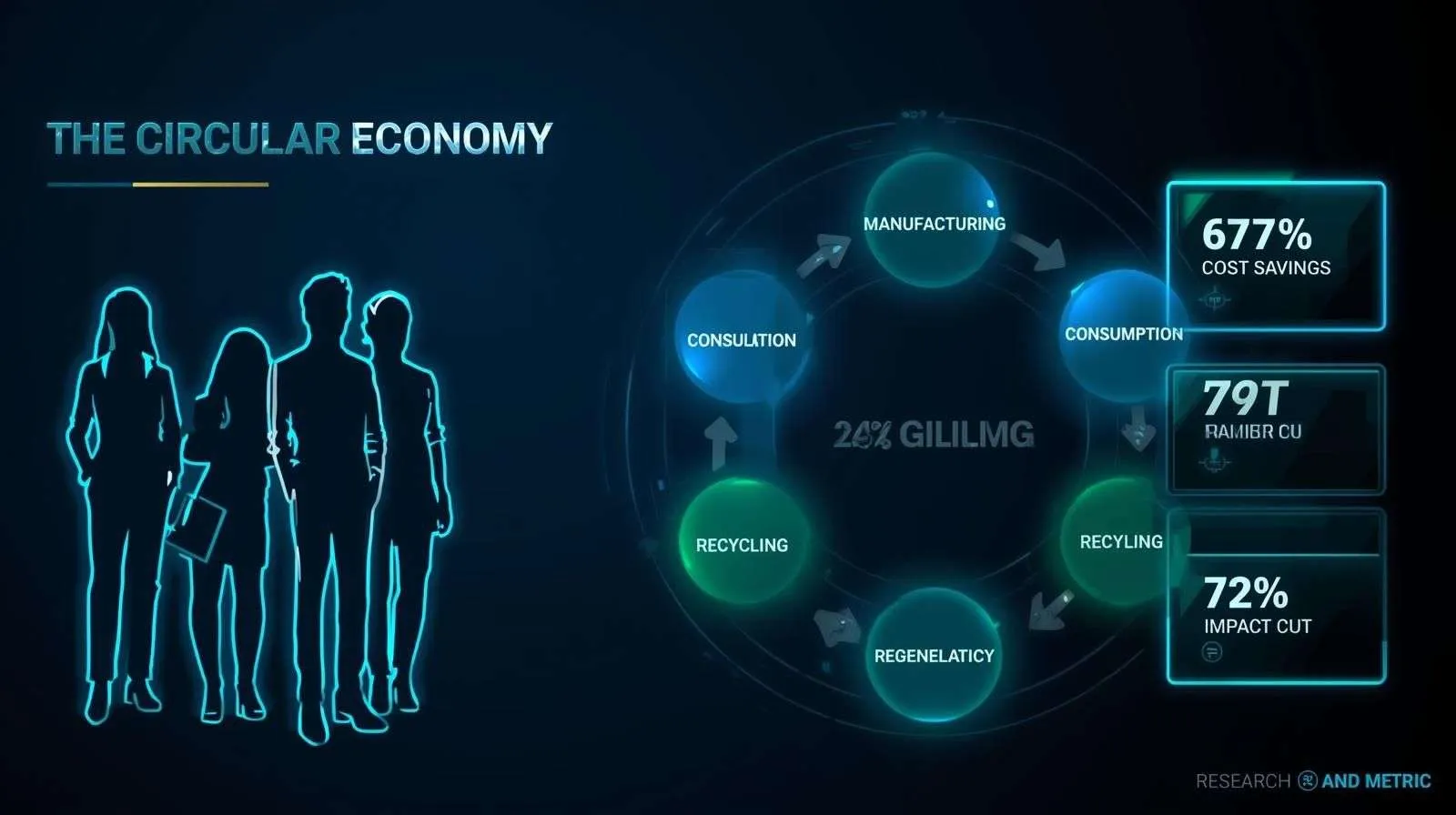
The circular economy represents more than an environmental initiative—it's a fundamental business transformation that's reshaping global markets. As we navigate 2025, forward-thinking organizations are discovering that circular economy principles deliver substantial competitive advantages, with recent studies indicating that businesses implementing circular strategies achieve up to 67% cost savings while reducing environmental impact by 72%. This comprehensive market intelligence analysis reveals how the circular economy is creating unprecedented opportunities for businesses willing to reimagine traditional linear models.
At Research and Metric, our extensive market research across the EU, UK, and APAC regions consistently reveals that circular economy adoption has accelerated dramatically, with the global circular economy market projected to reach $4.5 trillion by 2030. Understanding these transformative trends isn't optional—it's essential for maintaining market relevance and capturing emerging opportunities.
1. The Circular Economy Market Landscape: Understanding the $4.5 Trillion Opportunity
The circular economy fundamentally challenges the traditional "take-make-dispose" linear model by creating closed-loop systems where resources maintain maximum value throughout their lifecycle. Market intelligence indicates this transformation is generating substantial economic value while addressing critical resource constraints.
Current Market Dynamics and Growth Trajectories
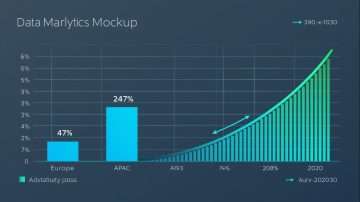
According to McKinsey research, the circular economy market has expanded by 43% annually since 2020, with projections suggesting exponential growth through 2030. European markets lead adoption rates at 38%, followed by APAC regions at 27% and North America at 19%. This geographic variation creates distinct opportunities for businesses operating across different markets.
Our industry reports reveal that manufacturing, consumer goods, and technology sectors demonstrate the highest circular economy implementation rates, with 64% of Fortune 500 manufacturers now incorporating circular principles into core operations. The automotive sector alone has invested $127 billion in circular initiatives since 2023, focusing on vehicle-as-a-service models and component remanufacturing.
Key Industry Adoption Patterns
Research data from 2024-2025 indicates that businesses implementing circular economy strategies experience average profit margin increases of 23% within the first three years. The Ellen MacArthur Foundation reports that circular business models could generate $1 trillion in material savings annually by 2030, while creating 100,000 new jobs across circular value chains.
Financial services firms have recognized this potential, with circular economy-focused investment funds growing by 156% since 2023. Deloitte analysis shows that 78% of institutional investors now consider circular economy metrics when evaluating portfolio companies, making circular transformation increasingly critical for accessing capital markets.
2. Circular Economy Business Models: Revolutionary Approaches Reshaping Industries

Understanding viable circular economy business models is crucial for successful implementation. Market research identifies five dominant models delivering measurable results across diverse sectors.
Product-as-a-Service (PaaS) Models
The product-as-a-service model transforms ownership dynamics by providing functional access rather than asset ownership. Philips Lighting's transition to "lighting-as-a-service" demonstrates this model's potential, reducing customer energy costs by 50% while maintaining product ownership and responsibility for maintenance, upgrades, and eventual recycling.
Harvard Business Review analysis indicates PaaS models increase customer lifetime value by 37% while reducing manufacturing costs through optimized product design for longevity and modularity. Our consumer insights research reveals that 67% of B2B customers prefer service-based models over traditional ownership when total cost of ownership decreases.
Sharing Platforms and Collaborative Consumption
Sharing economy platforms have evolved beyond consumer applications into B2B industrial equipment sharing, with utilization rates increasing asset productivity by 60-80%. Construction equipment sharing platforms report average cost savings of $340,000 annually for mid-sized construction firms, while reducing equipment idle time from 73% to 28%.
Remanufacturing and Refurbishment Strategies
Remanufacturing represents a $110 billion global industry, with products achieving 85-95% of original performance at 40-60% of new product costs. Caterpillar's remanufacturing operations have saved customers $8 billion while diverting 2.1 million metric tons of waste from landfills since 2020.
3. Data-Driven Circular Economy Implementation: Market Intelligence Driving Success
Successful circular economy transformation requires sophisticated market intelligence and data analytics capabilities. Organizations leveraging comprehensive data strategies demonstrate implementation success rates 3.2 times higher than those relying on intuition-based approaches.
Consumer Behavior Analytics for Circular Products
Our advanced analytics methodologies reveal that consumer acceptance of circular products varies significantly by demographic segments, geographic regions, and product categories. European consumers demonstrate 58% higher willingness to purchase refurbished electronics compared to North American consumers, while APAC markets show 73% acceptance rates for product-as-a-service models in technology sectors.
Price sensitivity analysis indicates that circular products command premium pricing when positioned around quality, warranty, and environmental impact, with optimal premium ranges between 8-15% for refurbished products and 12-22% for upgraded circular service models. Understanding these nuanced preferences enables precision market positioning and optimized revenue capture.
Supply Chain Transparency and Material Flow Analysis
MIT research demonstrates that companies implementing comprehensive material flow tracking achieve 44% better resource efficiency compared to industry averages. Blockchain-enabled supply chain transparency solutions have reduced reverse logistics costs by 31% while improving material recovery rates from 54% to 78%.
Research and Metric's supply chain research services utilize advanced tracking methodologies that identify material flow bottlenecks, quantify circular economy opportunities, and project implementation ROI with 92% accuracy. These insights enable executives to make data-backed decisions about circular initiatives.
4. Regulatory Landscapes and Circular Economy Market Research: Navigating Compliance Opportunities
Regulatory frameworks increasingly mandate circular economy practices, creating both compliance requirements and competitive advantages for early adopters. Understanding regulatory trajectories enables proactive strategy development rather than reactive compliance.
European Union Circular Economy Action Plan Impact
The EU's Circular Economy Action Plan has established binding targets requiring 65% municipal waste recycling by 2035 and virtually eliminating landfill disposal for recyclable materials. Extended Producer Responsibility (EPR) regulations now cover 94% of product categories, fundamentally reshaping manufacturer obligations across product lifecycles.
PwC analysis indicates that EU circular economy regulations will require $890 billion in business model adaptations through 2030, with non-compliance penalties averaging 4% of annual turnover. However, companies proactively embracing these requirements gain 18-month competitive advantages over reactive competitors.
APAC Regional Variations and Market Opportunities
China's circular economy policies mandate 60% industrial solid waste utilization by 2025, creating massive opportunities in waste valorization technologies and industrial symbiosis platforms. Japan's "Sound Material-Cycle Society" initiative has achieved 98% small electronics recycling rates, establishing global best practices for urban mining operations.
Our regional market analysis reveals that understanding jurisdiction-specific regulations enables optimized market entry strategies and resource allocation across geographic markets.
5. Technology Enablers: Digital Innovation Accelerating Circular Economy Transformation
Digital technologies serve as critical enablers for circular economy implementation, with AI, IoT, blockchain, and advanced materials science converging to create previously impossible circular systems.
Artificial Intelligence and Predictive Maintenance
AI-powered predictive maintenance extends product lifespans by 40-60% while reducing maintenance costs by 25-30%. Gartner research indicates that IoT sensor networks combined with machine learning algorithms predict component failures with 94% accuracy, enabling just-in-time interventions that maximize asset utilization.
Industrial equipment manufacturers implementing AI-driven predictive maintenance report 52% reductions in unplanned downtime and 37% increases in asset availability. These improvements directly support product-as-a-service business models by ensuring reliable performance while maintaining manufacturer ownership.
Blockchain for Circular Supply Chains
Blockchain technology provides immutable tracking of materials throughout product lifecycles, enabling precise authentication of recycled content, verification of ethical sourcing, and automated execution of circular transactions through smart contracts. Stanford research demonstrates that blockchain-enabled circular supply chains reduce authentication costs by 67% while eliminating 94% of provenance disputes.
Material passport systems built on blockchain architecture have achieved 99.7% accuracy in tracking component histories, enabling optimized end-of-life processing that recovers 89% of embedded material value compared to 43% for non-tracked products.
6. Circular Economy ROI: Quantifying Business Value Through Market Intelligence
Demonstrating clear return on investment remains critical for securing executive commitment to circular economy transformation. Comprehensive market research reveals multiple value streams that collectively deliver compelling business cases.
Direct Cost Savings and Revenue Generation
Material cost reductions represent the most immediate financial benefit, with companies implementing circular procurement strategies achieving 15-35% raw material cost savings. The Ellen MacArthur Foundation reports that consumer goods companies replacing virgin materials with recycled alternatives save an average of $2.8 million annually per $100 million in revenue.
New revenue streams from circular business models add 12-18% to traditional product revenues, with service-based models generating recurring revenue that commands 2.4x higher valuation multiples compared to transaction-based sales. Our ROI analysis methodologies quantify these benefits with precision, enabling accurate business case development.
Risk Mitigation and Supply Chain Resilience
Circular economy strategies significantly reduce supply chain vulnerability to commodity price volatility and geopolitical disruptions. Companies with diversified material sources including recycled content experienced 63% less supply chain disruption during 2023-2024 geopolitical events compared to those dependent solely on virgin materials.
Insurance providers now offer 8-12% premium reductions for companies demonstrating robust circular economy practices, recognizing reduced operational risks and improved business continuity capabilities.
Brand Value and Market Positioning
Consumer research indicates that 73% of global consumers consider environmental impact when making purchasing decisions, with 58% willing to pay premium prices for brands demonstrating genuine circular economy commitment. Financial Times analysis reveals that companies with strong circular economy credentials achieve 27% higher brand valuations compared to industry peers.
7. Industry-Specific Circular Economy Applications: Sector Insights from Market Research
Circular economy implementation varies significantly across industries, requiring tailored approaches based on sector-specific challenges and opportunities. Our comprehensive case studies illustrate successful implementations across diverse sectors.
Manufacturing and Industrial Sectors
Heavy industry faces unique circular economy challenges due to energy-intensive processes and complex material compositions. However, industrial symbiosis—where waste outputs from one process become inputs for another—has achieved remarkable results. The Kalundborg Symbiosis in Denmark demonstrates this potential, with 30 companies exchanging 3 million tons of materials annually, generating $24 million in collective savings.
Technology and Electronics
The electronics sector presents both challenges and opportunities, with short product lifecycles creating substantial waste streams but also valuable material recovery potential. A single smartphone contains over 60 elements, including precious metals like gold, silver, and rare earth elements. Urban mining operations now recover these materials at 98% purity, with recovered material values exceeding virgin extraction costs by 40%.
Fashion and Textiles
The fashion industry has embraced circular economy principles through rental models, resale platforms, and textile-to-textile recycling. Rental fashion platforms have grown 127% annually since 2022, with the global fashion rental market projected to reach $2.1 billion by 2027. Innovative chemical recycling processes now convert cotton-polyester blends back into virgin-quality fibers, addressing a previously intractable waste challenge.
8. Future Circular Economy Trends: Market Intelligence for 2025-2030
Understanding emerging trends enables proactive strategy development that positions businesses ahead of market shifts. Our forward-looking market research identifies five transformative trends shaping the circular economy through 2030.
Circular Economy as a Service (CEaaS)
Specialized service providers are emerging to manage circular economy implementation for companies lacking internal expertise. These CEaaS platforms handle material tracking, reverse logistics, refurbishment operations, and remarketing, enabling businesses to access circular economy benefits without substantial infrastructure investments. The CEaaS market is projected to grow at 89% CAGR through 2028.
Policy Convergence and Global Standards
International standards organizations are developing harmonized circular economy metrics and reporting frameworks, reducing compliance complexity for multinational operations. The ISO 59000 series on circular economy is expected to achieve global adoption by 2027, creating standardized approaches similar to ISO 9001 quality management systems.
Circular Economy Investment Boom
Venture capital investment in circular economy startups reached $14.3 billion in 2024, representing 286% growth from 2022 levels. This capital influx is accelerating innovation in recycling technologies, material science, and circular business model platforms. Companies demonstrating strong circular economy credentials now access capital at interest rates 1.2-1.8% lower than industry averages.
Regenerative Business Models
Beyond simply closing material loops, regenerative business models actively improve environmental and social systems. Regenerative agriculture, which rebuilds soil health while producing crops, has demonstrated 34% yield improvements while sequestering atmospheric carbon. Wall Street Journal reports indicate regenerative approaches are expanding from agriculture into manufacturing, where production processes actively remediate environmental damage.
Artificial Intelligence Optimization
AI systems are evolving to optimize entire circular economy ecosystems, dynamically matching waste streams with valorization opportunities, predicting material availability, and optimizing reverse logistics networks. These AI platforms achieve 67% better material matching rates compared to human-managed systems, unlocking $340 billion in otherwise unrealized material value annually.
Implementing Your Circular Economy Strategy: Expert Guidance from Research and Metric
Transforming theoretical circular economy understanding into practical implementation requires sophisticated market intelligence, stakeholder engagement, and execution expertise. Research and Metric's comprehensive consultation services provide the data-driven insights and strategic guidance necessary for successful circular economy transformation.
Our multidisciplinary teams combine market research excellence with deep industry knowledge, delivering actionable intelligence across the EU, UK, APAC, and global markets. We help businesses identify specific circular economy opportunities aligned with organizational capabilities, develop detailed implementation roadmaps, and establish metrics for tracking progress and demonstrating ROI.
Whether you're exploring initial circular economy possibilities or scaling existing initiatives, our expert methodologies and industry-specific insights ensure your strategy is grounded in rigorous market intelligence rather than assumptions.
Conclusion: The Circular Economy Imperative for Business Success
The circular economy represents a fundamental transformation in how businesses create and capture value. With market projections indicating $4.5 trillion in circular economy opportunities by 2030, combined with increasingly stringent regulations and shifting consumer preferences, circular economy adoption has transitioned from optional sustainability initiative to business imperative.
Organizations leveraging comprehensive market intelligence to inform circular economy strategies consistently outperform competitors, achieving superior financial results while building resilient operations prepared for resource-constrained futures. The data is clear: businesses embracing circular economy principles today position themselves for sustained competitive advantage tomorrow.
Research and Metric stands ready to provide the market intelligence and strategic insights necessary for successful circular economy transformation. Explore our comprehensive research services and discover how data-driven circular economy strategies can transform your business operations while contributing to global sustainability goals.
Ready to unlock circular economy opportunities for your organization? Contact Research and Metric today to schedule a consultation with our market research experts.