Key takeaways
- Renewable energy is now an economic imperative as well as an environmental one, with solar leading installations and offshore wind and storage emerging as key growth drivers.
- The global renewable market passed $1.8 trillion in 2024, with solar accounting for about 60% of investment and battery storage growing fastest.
- Asia-Pacific leads installations, driven by China and India, while Europe, North America and Latin America each show distinct strengths.
- Falling costs for solar, wind and lithium-ion batteries are making clean power competitive and grid-scale storage economically viable.
- Supply chain resilience and grid upgrades remain the main challenges, even as investment, consolidation and corporate procurement continue to grow.
On this page 11 sections
- Executive Summary: The Green Energy Revolution Accelerates
- Green Energy Market Research: Current Landscape and Size
- Technology Trends Shaping the Industry
- Policy Landscape and Regulatory Developments
- Market Challenges and Risk Assessment
- Investment Trends and Financial Market Analysis
- Emerging Technologies and Future Innovations
- Regional Market Deep Dive
- Strategic Recommendations and Market Opportunities
- Future Market Outlook and Predictions
- Conclusion and Call to Action
The global green energy market research landscape is experiencing unprecedented transformation as we advance through 2025. Renewable energy technologies are reaching new milestones, and governments worldwide are implementing ambitious sustainability targets. As a result, understanding current market dynamics has become crucial for business leaders and investors. Research and Metric's comprehensive analysis reveals that the green energy market research sector is expanding rapidly. It is also growing more complex, so it requires sophisticated methodologies to capture emerging trends and opportunities.
Executive Summary: The Green Energy Revolution Accelerates
The renewable energy trends analysis for 2025 demonstrates remarkable momentum across all clean energy sectors. Solar photovoltaic capacity continues to lead global installations. Meanwhile, offshore wind energy and energy storage solutions are emerging as critical growth drivers. Our sustainable energy analysis indicates that the transition toward renewable sources is no longer driven solely by environmental concerns. Instead, it has become an economic imperative for nations and corporations seeking energy independence and cost stability.
Market research indicates that global renewable energy investments reached unprecedented levels in late 2024. This sets the stage for explosive growth throughout 2025. In addition, the clean energy market forecast suggests that technological innovations, supportive policy frameworks and declining costs will continue to accelerate adoption rates. This applies across both developed and emerging markets.
Green Energy Market Research: Current Landscape and Size
 Global Market Valuation and Growth Projections
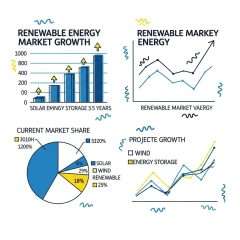
The green energy market research sector has documented substantial expansion in renewable energy installations worldwide. For example, current analysis suggests that the global renewable energy market has surpassed $1.8 trillion in 2024. Projections indicate continued double-digit growth through 2025. Technological advancements, cost reductions and increasing corporate commitments to sustainability support this growth trajectory.
Solar energy continues to dominate new capacity additions, accounting for approximately 60% of renewable energy investments globally. Wind energy, both onshore and offshore, represents the second-largest segment. However, hydroelectric power maintains its position as the largest source of existing renewable electricity generation. Energy storage technologies are experiencing the fastest growth rates. For example, battery storage capacity has increased by over 150% year-over-year.
Regional Market Dynamics
Energy market outlook analysis reveals significant regional variations in renewable energy adoption and investment patterns. Asia-Pacific continues to lead global installations. China's massive solar and wind programmes drive this, followed by India's ambitious renewable energy targets. Europe, meanwhile, maintains strong growth momentum, particularly in offshore wind development and grid modernisation initiatives.
North America shows robust growth in utility-scale solar and wind projects, supported by federal tax incentives and state-level renewable portfolio standards. The region's focus on energy independence has accelerated domestic manufacturing initiatives for solar panels, wind turbines and battery components. Latin America, in contrast, demonstrates strong potential in solar and wind resources. Several countries there have achieved grid parity for renewable electricity.
Technology Trends Shaping the Industry
Solar Energy Innovations and Cost Trajectories
Recent green technology research highlights breakthrough developments in photovoltaic efficiency and manufacturing processes. For example, perovskite-silicon tandem cells are approaching commercial viability. They promise efficiency gains that could further reduce solar electricity costs. In addition, advanced manufacturing techniques, including heterojunction technology and bifacial panel designs, are enabling higher energy yields from solar installations.
Cost analysis reveals that solar electricity has achieved grid parity in a wide range of markets, making it the cheapest source of electricity in many regions. Research and Metric's market research methodologies have tracked solar panel prices declining by approximately 12% annually. This decline continued despite temporary supply chain disruptions in 2024.
Wind Energy Advancements and Market Expansion
Offshore wind energy represents one of the most promising growth segments within renewable energy trends analysis. Turbine technology continues advancing toward larger, more efficient designs. As a result, 15-20 MW turbines are becoming standard for offshore installations. Floating offshore wind platforms are also opening previously inaccessible markets, particularly in deeper waters with stronger wind resources.
Onshore wind development benefits from improved turbine designs and advanced siting technologies. These maximise energy capture while minimising environmental impacts. Research indicates that modern wind turbines generate electricity at costs below $30 per megawatt-hour in optimal locations. Therefore, wind power is highly competitive with conventional energy sources.
Energy Storage and Grid Integration Solutions
The sustainable energy analysis sector has identified energy storage as the critical enabler for renewable energy expansion. For example, lithium-ion battery costs have declined by over 80% since 2020, making grid-scale storage economically viable for utility applications. Research and Metric's data collection methods have documented rapid deployment of battery storage systems coupled with renewable energy projects.
Grid modernisation initiatives are incorporating smart technologies that optimise renewable energy integration and improve system reliability. Advanced forecasting systems, demand response programmes and virtual power plants are creating more flexible and resilient electricity networks. These networks can manage variable renewable energy sources.
Policy Landscape and Regulatory Developments
 International Climate Commitments and Implementation
Government policies continue driving renewable energy adoption through various support mechanisms and regulatory frameworks. For example, Paris Agreement implementation has accelerated national renewable energy targets. Many countries have updated their commitments to achieve carbon neutrality by 2050 or earlier. Policy analysis reveals that successful renewable energy transitions require coordinated approaches. These combine technology deployment, grid infrastructure development and market mechanism reforms.
Renewable energy certificates, carbon pricing mechanisms and green taxonomy regulations are creating market structures that reward clean energy investments. Research and Metric's industry analysis techniques track how policy frameworks influence investment decisions. They also follow technology deployment patterns across different markets.
Corporate Sustainability and Renewable Energy Procurement
Corporate renewable energy procurement has become a major market driver. Companies are seeking to meet sustainability goals and hedge against energy price volatility. For example, power purchase agreements (PPAs) for renewable energy have reached record volumes. They provide long-term revenue certainty for project developers. At the same time, they offer corporate buyers predictable electricity costs.
Environmental, social and governance (ESG) considerations are increasingly influencing corporate energy strategies and investment decisions. As a result, companies across various industries are establishing science-based targets for emissions reductions. This creates sustained demand for renewable energy solutions and drives innovation in clean technology sectors.
Market Challenges and Risk Assessment
Supply Chain Resilience and Material Constraints
The clean energy market forecast identifies several challenges that could impact growth trajectories in 2025 and beyond. Supply chain resilience, for example, remains a concern for critical materials used in solar panels, wind turbines and battery storage systems. Polysilicon availability, rare earth elements for permanent magnet generators and lithium supplies for batteries require careful monitoring. This helps prevent bottlenecks.
Research indicates that diversifying supply chains and developing domestic manufacturing capabilities are becoming strategic priorities for countries seeking energy security. In addition, investment in recycling technologies for solar panels and wind turbine components is increasing. The industry is preparing for equipment replacement cycles in coming decades.
Grid Infrastructure and Integration Challenges
Grid infrastructure modernisation represents a significant challenge and opportunity within the renewable energy sector. Existing electricity grids require substantial upgrades to accommodate increasing renewable energy penetration. They must also maintain system reliability and stability. Research and Metric's expertise areas include analysis of grid integration technologies and their market implications.
Intermittency management continues requiring sophisticated solutions that combine energy storage, demand response and grid flexibility measures. Regional transmission development is also essential for connecting renewable energy resources to demand centres. However, this often requires complex regulatory coordination and significant capital investments.
Investment Trends and Financial Market Analysis
Capital Flow Patterns and Funding Mechanisms
Investment analysis reveals evolving capital flow patterns within the green energy sector. Institutional investors are increasing allocations to renewable energy assets, attracted by stable long-term returns and portfolio diversification benefits. In addition, green bonds, sustainability-linked loans and blended finance mechanisms are providing new funding sources for renewable energy projects.
Venture capital and private equity investments in clean technology startups have reached new heights. They focus on energy storage innovations, grid management software and next-generation renewable energy technologies. Research and Metric's previous case studies demonstrate how financial market dynamics influence technology development and deployment strategies.
Valuation Trends and Market Consolidation
Market consolidation is accelerating as companies seek scale economies and vertical integration benefits. For example, major energy companies are acquiring renewable energy developers, while technology companies are expanding into energy storage and grid management services. Valuation multiples for renewable energy assets remain elevated. This reflects strong investor confidence in long-term growth prospects.
Research indicates that successful companies in the green energy sector combine technological innovation with strong execution capabilities and strategic market positioning. Market research trends also show the increasing importance of software and data analytics capabilities. These capabilities help optimise renewable energy operations and maximise asset values.
Emerging Technologies and Future Innovations
Next-Generation Renewable Energy Technologies
Green technology research continues identifying promising innovations that could transform the energy landscape. Perovskite solar cells, floating solar installations and agrovoltaics represent emerging applications that could expand solar energy deployment opportunities. Similarly, advanced wind technologies, including airborne wind energy systems and vertical axis turbines, are approaching commercial readiness.
Hydrogen production using renewable electricity is gaining momentum. Governments and industries are seeking solutions for hard-to-decarbonise sectors. Research and Metric's analysis suggests that green hydrogen could become a major market opportunity, particularly for industrial applications and long-duration energy storage.
Digital Technologies and Market Intelligence
Artificial intelligence and machine learning applications are revolutionising renewable energy project development, operations and maintenance. For example, predictive analytics optimise energy production forecasting, while automated monitoring systems reduce operational costs and improve performance. Digital twin technologies also enable better project planning and risk assessment throughout the project lifecycle.
Blockchain technologies are being explored for renewable energy certificate trading, peer-to-peer energy transactions and supply chain transparency. As a result, these innovations are creating new business models and market structures. These could accelerate clean energy adoption while improving market efficiency.
Regional Market Deep Dive
Asia-Pacific Leadership and Market Dynamics
The Asia-Pacific region continues leading global renewable energy deployment. Supportive government policies, declining technology costs and increasing electricity demand drive this leadership. China maintains its position as the world's largest renewable energy market, with substantial investments in solar manufacturing, wind development and energy storage deployment.
India's renewable energy programme represents one of the most ambitious expansion plans globally. It targets 500 GW of renewable capacity by 2030. Japan and South Korea, meanwhile, are focusing on offshore wind development and hydrogen technologies. These are key components of their energy transition strategies. In addition, research indicates that regional cooperation on grid interconnection and technology sharing could accelerate renewable energy adoption across Southeast Asia.
European Market Innovation and Integration
Europe's renewable energy market is characterised by advanced grid integration technologies and innovative market mechanisms. The European Green Deal and REPowerEU initiatives are accelerating renewable energy deployment while reducing dependence on fossil fuel imports. Offshore wind development in the North Sea and Baltic Sea represents a major growth opportunity. Multiple countries are coordinating development plans.
Energy market outlook analysis shows that Europe is a technology leader in advanced clean energy solutions. Its focus on energy storage, sector coupling and renewable hydrogen production supports this position. Furthermore, the European Union's taxonomy for sustainable activities is influencing global standards for green investment classification.
Strategic Recommendations and Market Opportunities
Investment Strategy Considerations
Sustainable energy analysis suggests several strategic considerations for investors and market participants. Technology risk continues declining as renewable energy technologies mature and demonstrate reliable performance over extended operating periods. However, policy risk remains significant. This applies particularly in markets with changing regulatory frameworks or uncertain political support for clean energy initiatives.
Research and Metric recommends diversified approaches that balance established technologies with emerging innovation opportunities. For example, geographic diversification can help manage policy and market risks while capturing growth opportunities in different regional markets. Strategic partnerships can also provide competitive advantages in complex market environments. Useful partners include technology providers, financial institutions and government agencies.
Market Entry and Expansion Strategies
Companies considering entry into renewable energy markets should conduct thorough market research. This helps them understand local regulatory requirements, competitive dynamics and customer preferences. Research and Metric's related industry reports provide detailed analysis of market entry strategies and success factors across different renewable energy segments. For guidance on choosing a research partner, professional bodies such as ESOMAR publish useful standards for the industry.
Successful market expansion requires understanding regional differences in technology preferences, financing mechanisms and project development processes. In particular, local partnerships, regulatory expertise and cultural understanding are critical success factors for international renewable energy companies.
Future Market Outlook and Predictions
2025-2030 Growth Projections
The green energy market research outlook for the remainder of 2025 and beyond indicates sustained high growth. This applies across all renewable energy technologies. Solar and wind capacity additions are expected to accelerate, driven by continued cost reductions and supportive policy frameworks. Energy storage deployment will likely grow even faster. This is because grid operators recognise the value of flexible resources for managing renewable energy variability.
Research projections suggest that renewable energy could account for over 80% of new electricity capacity additions globally by 2030. This transformation will require substantial investments in grid infrastructure, energy storage and advanced grid management technologies. As a result, market participants that position themselves strategically within this evolving landscape will capture significant value creation opportunities.
Technology Convergence and Market Integration
The convergence of renewable energy with digital technologies, transportation electrification and industrial decarbonisation is creating new market segments and business models. For example, electric vehicle charging infrastructure, green hydrogen production and synthetic fuel development represent emerging applications. These could drive additional renewable energy demand.
Research and Metric's analysis indicates that successful companies will be those that understand these interconnections. They will also develop integrated solutions addressing multiple market needs. Moreover, cross-sector partnerships and technology integration capabilities will become increasingly important competitive differentiators.
Conclusion and Call to Action
The green energy market research landscape for 2025 presents unprecedented opportunities for growth, innovation and value creation. Organisations that understand emerging trends, anticipate market developments and position themselves strategically will thrive in this dynamic environment. The transition to renewable energy is accelerating globally. As a result, demand is growing for sophisticated market intelligence and strategic analysis.
Research and Metric's comprehensive approach to energy market analysis provides the insights necessary for informed decision-making in this rapidly evolving sector. Our expertise in renewable energy trends, sustainable technology assessment and market forecasting enables clients to navigate complex market dynamics. It also helps them identify profitable opportunities.
Ready to leverage green energy market opportunities? Contact Research and Metric today for customized market research and strategic analysis tailored to your specific needs. Our team of energy market experts is prepared to help you understand, analyze, and capitalize on the renewable energy transformation. Schedule a free consultation to discuss your green energy market research requirements.
Get new articles by email
Useful tips on surveys and research. One email when we post something new. Unsubscribe anytime.