The challenge
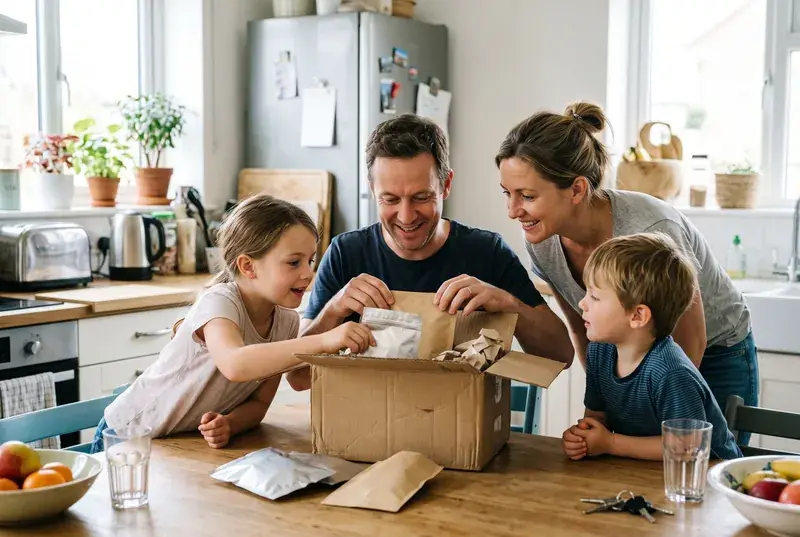
A food manufacturer wanted an in-home usage test to gather real-life feedback on a new snack range before launch. Products had to reach the right households in good condition, and the research had to capture feedback over a full week of use.
This kind of snack product testing is different from a hall or kitchen session. People eat snacks at different times of day, share them with family and compare them with what is already in the cupboard. As a result, a short taste session can miss how a product really performs.
Why test snacks at home
A home use test lets people try a product in the setting where they would normally eat it. Consumer product testing at home shows how a snack fits into daily routines, such as lunchboxes, evening viewing or visits from friends.
It also gives people time. Opinions often change after the first taste, so a week of use shows whether interest lasts, whether packs get finished and whether other household members like the product too.
How we ran the in-home usage test
We recruited households, delivered blind-coded products and collected daily diary entries and a final survey.
- Recruited primary grocery shoppers who buy the category regularly
- Delivered blind-coded packs with usage instructions
- Collected daily diary entries by mobile
- Ran a follow-up survey after the usage week
An in-home usage test like this falls under the ESOMAR International Code, which sets out how researchers should treat participants.
Good practice in product placement research
Product placement research depends on getting the right product to the right household. Clear screening comes first, so that only genuine category buyers take part. Next, packs need to arrive in good condition, with simple instructions on how and when to use them.
A blind product test removes brand names and familiar packaging, so people react to the snack itself. Each pack carries a neutral code, and we track the codes carefully so that every response links back to the correct product.
Keeping instructions simple
Participants should know what to do on each day of the week. Short, plain instructions reduce mistakes and help people complete the full task. A clear point of contact also helps if a pack arrives damaged or a question comes up.
Using diaries and a follow-up survey
Diary study market research captures reactions while they are fresh. Participants record what they ate, when, with whom and what they thought. Because participants make entries close to the moment of use, the entries rely less on memory than a single survey at the end.
Mobile entries make this easier for participants. Short, structured questions work best, with space for a few words in the participant's own voice. For example, a diary can ask about the occasion, the taste and whether the person would eat the snack again.
The follow-up survey then pulls everything together. It asks for an overall view of the product, compares it with current favourites and covers purchase interest. Analysts can then read diary and survey data side by side, so what people said during the week backs up the survey scores.
Turning feedback into launch decisions
Findings are most useful when the data is clean and easy to analyse. Tabulated results let the brand team compare groups, such as different household types, and see where the product works best. Verbatim comments add colour and explain the numbers.
The key aim is to give decision makers evidence before launch. If a flavour, pack size or instruction needs to change, it is far better to find out at this stage than on the shelf.
The results
- 400 households completed the full usage week
- Diary and survey data delivered in one clean file
- Feedback in hand ahead of launch decisions
Illustrative scenario based on typical engagements. Client details are anonymised.