Key takeaways
- CATI uses telephone interviewers, CAPI uses face-to-face interviewers and CAWI is online self-completion, and all three rely on a programmed questionnaire.
- No method wins on every factor: CAWI is usually cheapest and fastest, CATI sits in the middle, and CAPI is typically the most expensive and slowest.
- Coverage differs most: CAWI reaches only online groups, CATI reaches people with phones, and CAPI is often the only credible route to offline populations.
- Each mode has its own quality risks, so plan data cleaning and quality checks from the start.
- Choose the method by audience, representation, stimulus, sensitivity, budget and deadline, and consider mixed-mode designs while managing mode effects.
On this page 8 sections
Choosing between CATI vs CAPI vs CAWI is one of the first decisions in any quantitative study. It shapes almost everything that follows: who you can reach, how long fieldwork takes, what the questionnaire can do and how far you can trust the answers. However, the decision is often made by habit, or by whatever was used on the last project.
This guide explains what each survey method means and how the three compare on cost, speed, reach and data quality. It also shows how to match the method to your audience and objectives. It is written for research professionals at agencies and brands. They need a practical way to decide, not a theoretical overview.
What CATI, CAPI and CAWI actually mean
All three are computer-assisted modes. The interviewer or the respondent works through a programmed questionnaire. This handles routing, validation and data capture automatically. However, the channel differs: telephone, in person or web.
CATI: computer-assisted telephone interviewing
Computer-assisted telephone interviewing (CATI) means a trained interviewer calls the respondent and reads the questionnaire from a screen. The interviewer enters answers as they go. In addition, supervisors can listen in, monitor quality and coach interviewers in real time. For example, sample can come from a list, a panel, a customer database or random digit dialling, depending on the study.
CATI suits audiences who are easier to reach by phone than online. Examples include busy professionals, older adults and customers on a client list. It also suits respondents in markets where internet access is uneven. Our CATI services cover this kind of work.
CAPI: computer-assisted personal interviewing
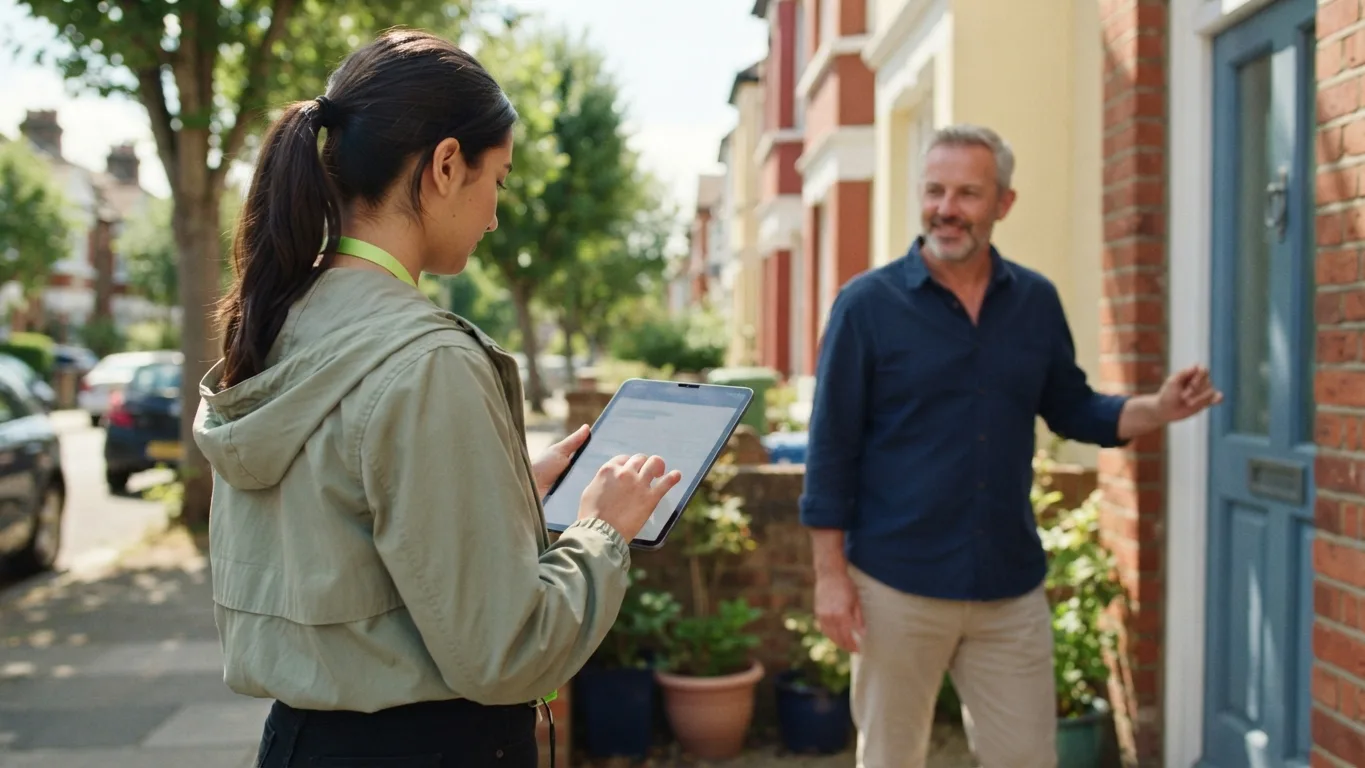
Computer-assisted personal interviewing (CAPI) means an interviewer meets the respondent face to face, for example at home, in the street, at a business or at a central venue. The interviewer records answers on a tablet or laptop. In addition, interviewers can show images, packs, concepts or product samples, and can confirm who is answering.
CAPI is the method of choice when you need representative coverage of a general population that is not fully online. It also works well when stimulus must be handled physically. Likewise, it suits long interviews that benefit from rapport. See our face-to-face research (CAPI) page for how this is run in practice.
CAWI: computer-assisted web interviewing
Computer-assisted web interviewing (CAWI) is the self-completion online survey. Respondents receive a link by email, SMS, app, panel invitation or QR code. They then complete the questionnaire on their own device. There is no interviewer, so the questionnaire design and the quality controls carry the whole load.
CAWI is the most common mode for consumer and B2B research where the target audience is online. It is flexible, quick and well suited to visual stimulus, long scales and complex routing. Our online data collection service covers it end to end.
CATI vs CAPI vs CAWI: how the three methods compare
No method wins on every dimension. The table gives a general picture of the typical trade-offs between CATI vs CAPI vs CAWI. However, actual results depend on country, audience, incidence and questionnaire length. Treat the table as a starting point for discussion rather than a quote.

| Factor | CATI | CAPI | CAWI |
|---|---|---|---|
| Cost per complete | Medium to high | Highest | Lowest |
| Speed of fieldwork | Medium | Slowest | Fastest |
| Reach | Anyone with a phone | Offline and online populations | Online populations only |
| Interviewer effect | Moderate | Highest | None |
| Stimulus handling | Verbal only | Physical and visual | Visual, audio, video |
| Sensitive topics | Moderate candour | Lower candour | Highest candour |
| Respondent verification | Good | Strongest | Needs technical checks |
Cost
CAWI is usually the most economical because there is no interviewer time and no travel. CATI adds interviewer, supervision and telephony costs. These rise quickly when incidence is low and many calls are needed per complete. By contrast, CAPI is typically the most expensive, since it includes interviewer travel, sampling in the field, supervision and back-checking.
Incidence matters in every mode. A narrow target with a low incidence rate pushes up the cost of finding each qualified respondent. This is true whichever channel you use. Our guide to survey incidence rate, IR and LOI explains how these inputs shape a fieldwork quote.
Speed
Online fieldwork can often complete in days when the audience is broad and the panel is deep. By contrast, CATI is steady and controllable: you add interviewers and extend calling hours. However, CAPI is the slowest to mobilise because it depends on recruiting and briefing field teams, travel logistics and local conditions. Therefore, if you have a hard deadline, speed alone may narrow your choice.
Reach and coverage
Coverage is where the three methods diverge most. CAWI can only reach people who are online and willing to join panels or respond to invitations. As a result, it can under-represent older, rural or lower-income groups in some markets. CATI reaches people through a phone. However, response rates, the mobile and landline mix and call-screening habits all affect who answers. In contrast, CAPI can reach households directly and is often the only credible route to a nationally representative offline population.
For niche groups, the best channel depends on the audience, not the mode. For example, senior executives may respond best to a phone call arranged at a convenient time. In contrast, physicians may prefer a short online survey they can complete between patients. Good respondent recruitment starts by asking where the audience is actually reachable.
Data quality
Each mode carries its own quality risks. These are often called mode effects. They are systematic differences in answers caused by how the question was delivered, not by what the respondent thinks.
- CATI: interviewers can clarify and probe, and supervisors can monitor calls. However, risks include acquiescence, social desirability and fatigue on long or complex scales. This is because everything is heard rather than read.
- CAPI: strong respondent verification and rich stimulus handling. However, the interviewer's presence can influence answers on sensitive or socially loaded topics. Interviewer quality also varies, so back-checks and GPS or audio audit trails matter.
- CAWI: respondents tend to be more candid on sensitive topics and can answer at their own pace. However, risks include speeding, straight-lining, duplicate or fraudulent respondents and bots. These need layered checks. Our piece on layered quality control sets out how they are handled.
Whatever the mode, plan data cleaning and quality checks from the start rather than adding them once the data arrives.
CATI vs CAPI vs CAWI: when to choose each survey method
The right survey method follows from the audience and the objective. These are the situations where each tends to fit best.

Choose CATI when
- The audience is better reached by phone than online, such as senior professionals, older respondents or customers on a supplied list.
- You need an interviewer to explain, probe or screen carefully, but the questionnaire does not rely on heavy visual stimulus.
- You want tight control over quotas and live monitoring of quality.
- Online coverage of the target group is weak or biased.
Choose CAPI when
- You need a representative sample of a general population where online access is incomplete.
- Respondents must see, touch or taste something, or you need to confirm who is answering.
- The questionnaire is long or involves a literacy barrier that makes self-completion unreliable.
- Budget and timeline allow for field teams and supervision.
Choose CAWI when
- The target audience is online and reachable through panels, customer lists or social channels.
- You need speed, scale or a tight budget.
- The questionnaire uses images, video, concept boards, conjoint exercises or complex routing.
- The topic is sensitive and you want to reduce interviewer influence.
If you need respondents for online work, our online panel and sample service can match the audience to the study design.
A simple way to decide: five questions
When a brief lands, work through these questions in order to settle CATI vs CAPI vs CAWI. They usually narrow the field quickly.
- AudienceWho exactly is the audience, and how do they prefer to be contacted?
- RepresentationWhat does the sample need to represent?
- StimulusWhat stimulus do you need to show?
- SensitivityHow sensitive is the topic?
- Budget and deadlineWhat are the budget and deadline?
- Who exactly is the audience, and how do they prefer to be contacted? If you cannot reach them online in a representative way, CAWI alone may not work.
- What does the sample need to represent? A nationally representative result points towards CAPI or a carefully designed mixed approach. In contrast, a defined customer or professional group often fits CATI or CAWI.
- What stimulus do you need to show? For example, physical products point to CAPI. Digital concepts and video point to CAWI. Verbal concepts are workable by CATI.
- How sensitive is the topic? In general, the more personal the subject, the more a self-completion mode helps.
- What are the budget and deadline? Be honest about the trade-off between coverage and cost. However, a cheaper mode that misses part of the population can cost more in reduced confidence.
Mixed-mode: combining methods
A mixed-mode survey uses more than one method within the same study. Common patterns include starting online and following up non-responders by phone. Another pattern uses CAPI for offline households and CAWI for online ones. A third uses CATI to recruit and CAWI to complete.
The aim is better coverage and response without the full cost of a single expensive mode. However, mode effects can create differences between sub-samples that look like real differences in opinion. To manage this:
- Keep question wording and response scales as consistent as the mode allows.
- Avoid mixing modes within a tracking series unless you plan for a bridging period.
- Record the mode for every respondent so you can test for differences in analysis.
- Use survey weighting to correct for known coverage gaps. However, weighting cannot fix a mode that never reaches a group.
Mixed-mode work also benefits from a single team managing questionnaire scripting, fieldwork and checks. As a result, routing, quotas and definitions stay aligned across channels.
Practical points that affect every mode
Questionnaire design
A questionnaire written for the web will not always work by phone. For example, long lists of response options, grids and visual scales are hard to hear. For CATI, shorten lists, use simpler scales and repeat the scale labels. For CAPI, use show cards where needed. For CAWI, test on mobile first, since many respondents will use a phone.
Language and translation
Multi-market studies add translation and cultural adaptation. Interviewers need briefing on tone and pronunciation. Web surveys, in turn, need careful testing of translated text on screen. Therefore, build time for translation checks into the plan.
Compliance and respondent care
Each mode has its own consent and data protection considerations. Examples include call recording, number sourcing, in-person consent and online privacy notices. Fieldwork should follow the ICC/ESOMAR International Code and applicable data protection law. Your partner should be able to explain how it does so in each channel.
Quality documentation
Ask how interviewers are trained and monitored, how respondents are verified and how fraud is detected. Our guide to data quality benchmarks lists useful questions to put to a fieldwork partner.
Bringing it together
In the CATI vs CAPI vs CAWI debate, the three methods are not rivals so much as tools with different strengths. CAWI offers speed, scale and candour for online audiences. CATI offers reach and interviewer guidance without the cost of travel. CAPI offers coverage, verification and physical stimulus where other modes fall short.
The best choice starts with the audience and the decision the research must support, not with the method. If you are weighing options for an upcoming project, our team can review your brief. We can then recommend a single-mode or mixed-mode design. You can find out more about our fieldwork services or get in touch through the website.
FAQ
Which is cheaper in CATI vs CAPI vs CAWI?
CAWI is usually the cheapest, CATI sits in the middle and CAPI is typically the most expensive. The gap depends on incidence, questionnaire length and location. As a result, a low-incidence online study can still cost more than a simple phone study.
Is CAWI always better because it is faster?
No. Speed helps only if the online sample represents your target audience. However, if key groups are hard to reach online, a faster result may be less reliable than a slower CATI or CAPI approach.
Can I combine CATI, CAPI and CAWI in one study?
Yes. A mixed-mode design can improve coverage and response. However, keep questions consistent across modes. Record the mode for each respondent and test for mode effects in the analysis.
Get new articles by email
Useful tips on surveys and research. One email when we post something new. Unsubscribe anytime.